ZWO have ended sales of the Seestar S50 smart telescope and announced that it will be replaced by the S50 Pro later in 2026.
Here’s what we can expect from the upgrade — and how it fits into the wider smart telescope market.
The Seestar S50 — What Made It Stand Out
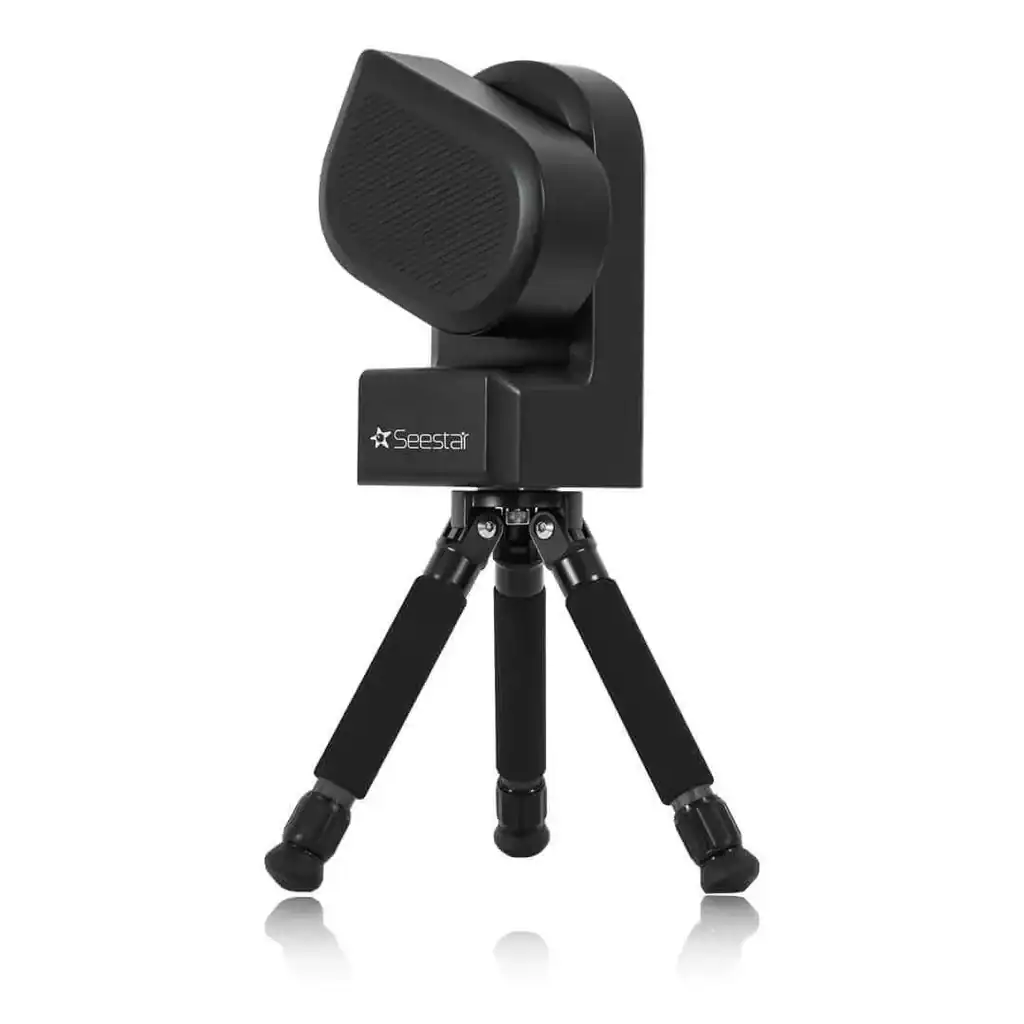
The S50 launched in 2023, alongside the Dwarflab Dwarf 2, as one of the first genuinely compelling budget smart telescopes.
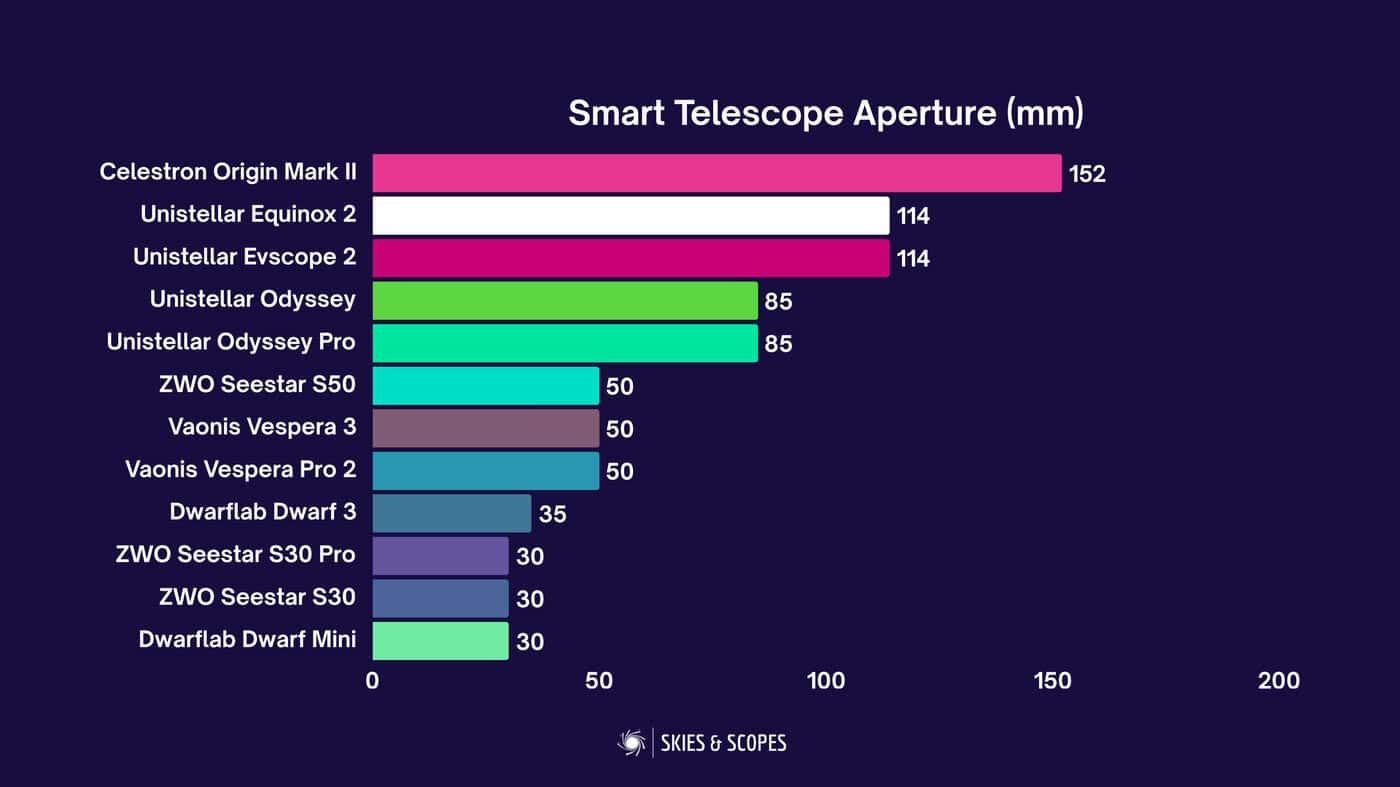
ZWO has since expanded the range with the Seestar S30 in 2024 and the S30 Pro in 2026 — but the S50 held its own for one key reason: aperture.
Aperture is one of the most important specifications in any telescope.
A wider aperture gathers more light, which translates directly into brighter, more detailed deep-sky images.
At 50 mm, the S50 was larger than any other budget smart telescope.
The other Seestar models and the Dwarflab Dwarf Mini sit at 30 mm; the Dwarf 3 sits at 35 mm.
That 50 mm aperture also put the S50 on par with premium models like the Vaonis Vespera 3 and Vespera Pro 2 — for significantly less money.
The one area where it fell short was camera resolution.
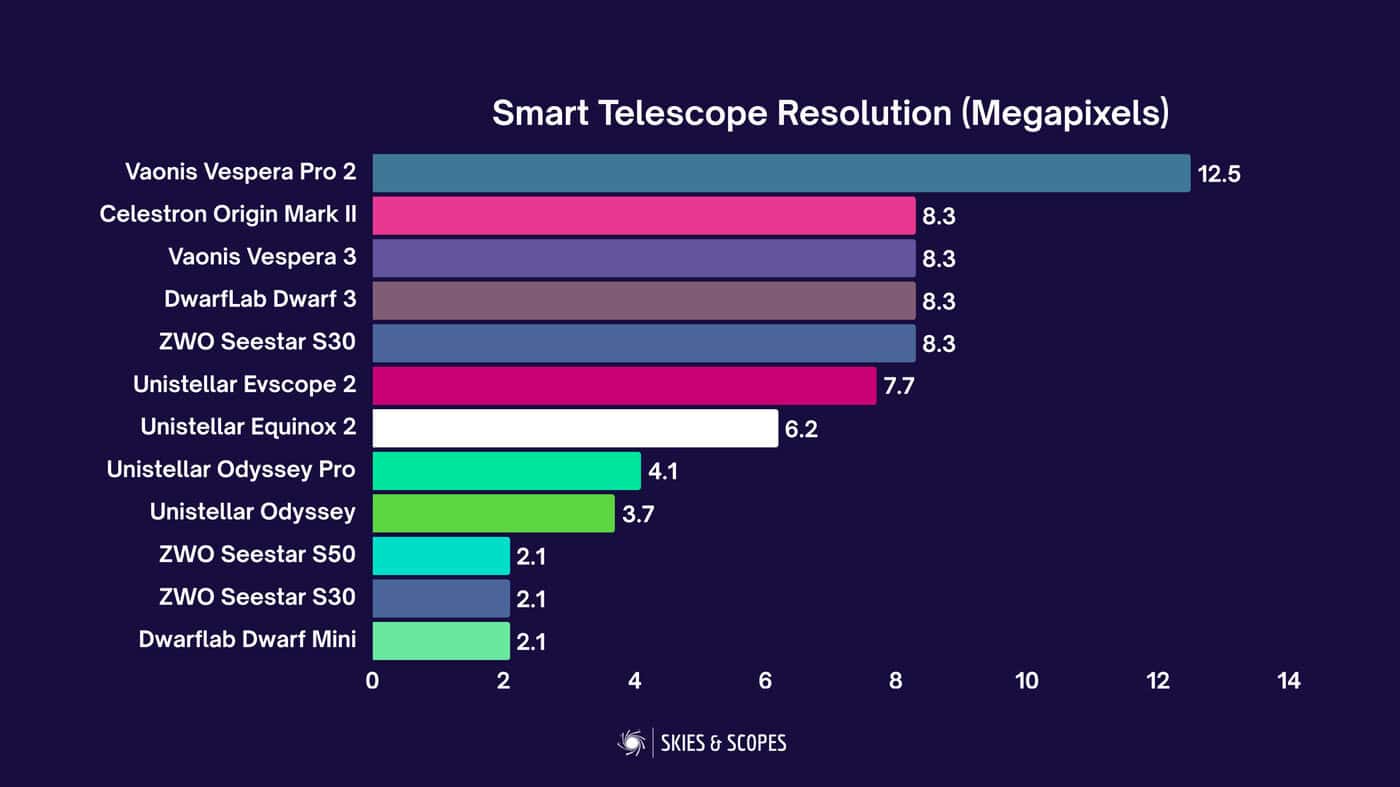
At 2.1 MP, the S50’s sensor sat at the low end of the market — well behind most competing models, and a limitation that showed in the fine detail of its images.
What to Expect from the S50 Pro
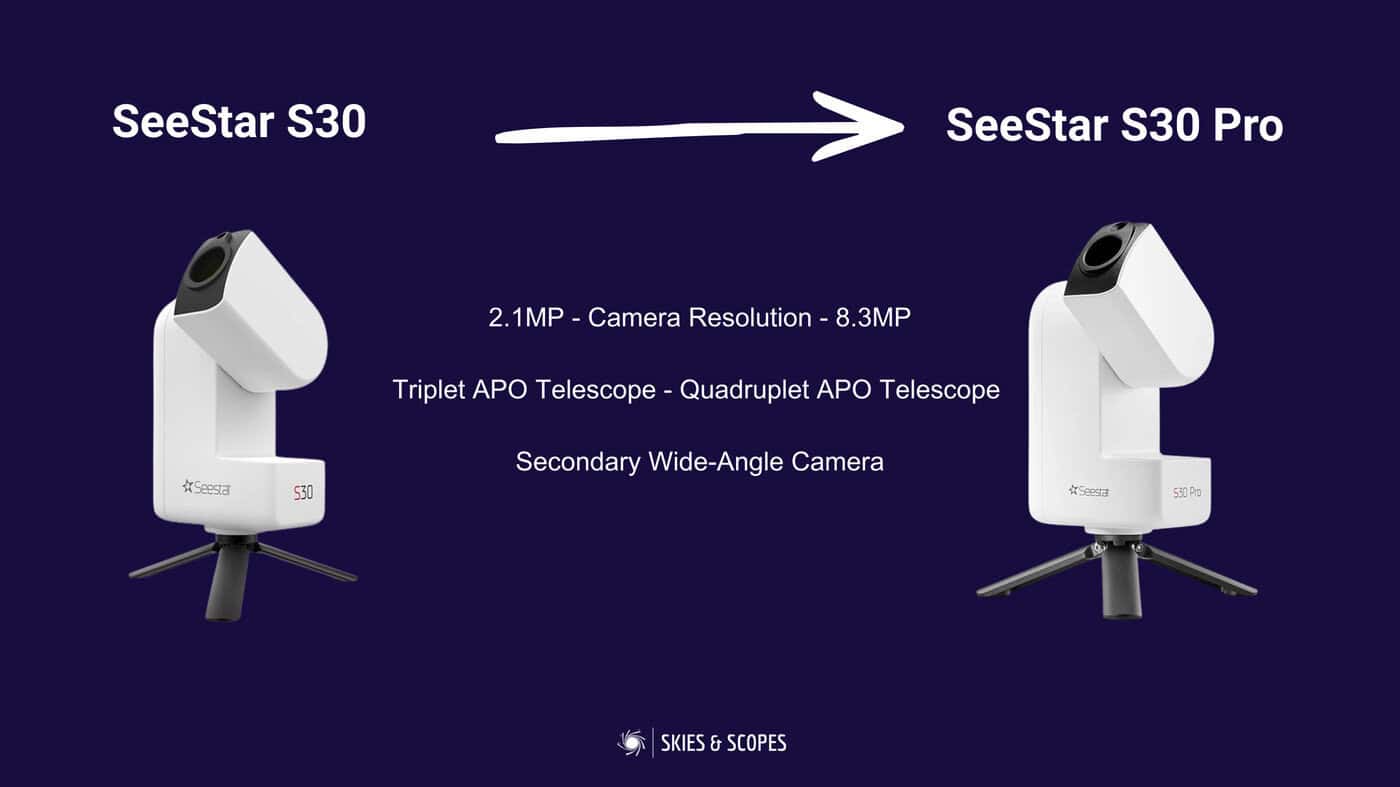
There’s no official spec sheet yet, but the upgrade path from the S30 to the S30 Pro gives us a strong template.
Those upgrades were:
- Camera resolution: from 2.1 MP up to 8.3 MP
- Optics: triplet APO lens upgraded to a quadruplet APO
- A secondary wide-angle camera for Milky Way shots, nightscapes, and star-trail timelapses
Applying the same logic to the S50 Pro, we can reasonably expect:
- A better camera — most likely up to 8.3 MP, bringing it in line with other current models
- Improved optics while retaining the 50 mm aperture — still the largest of any budget smart telescope
- A secondary wide-angle camera
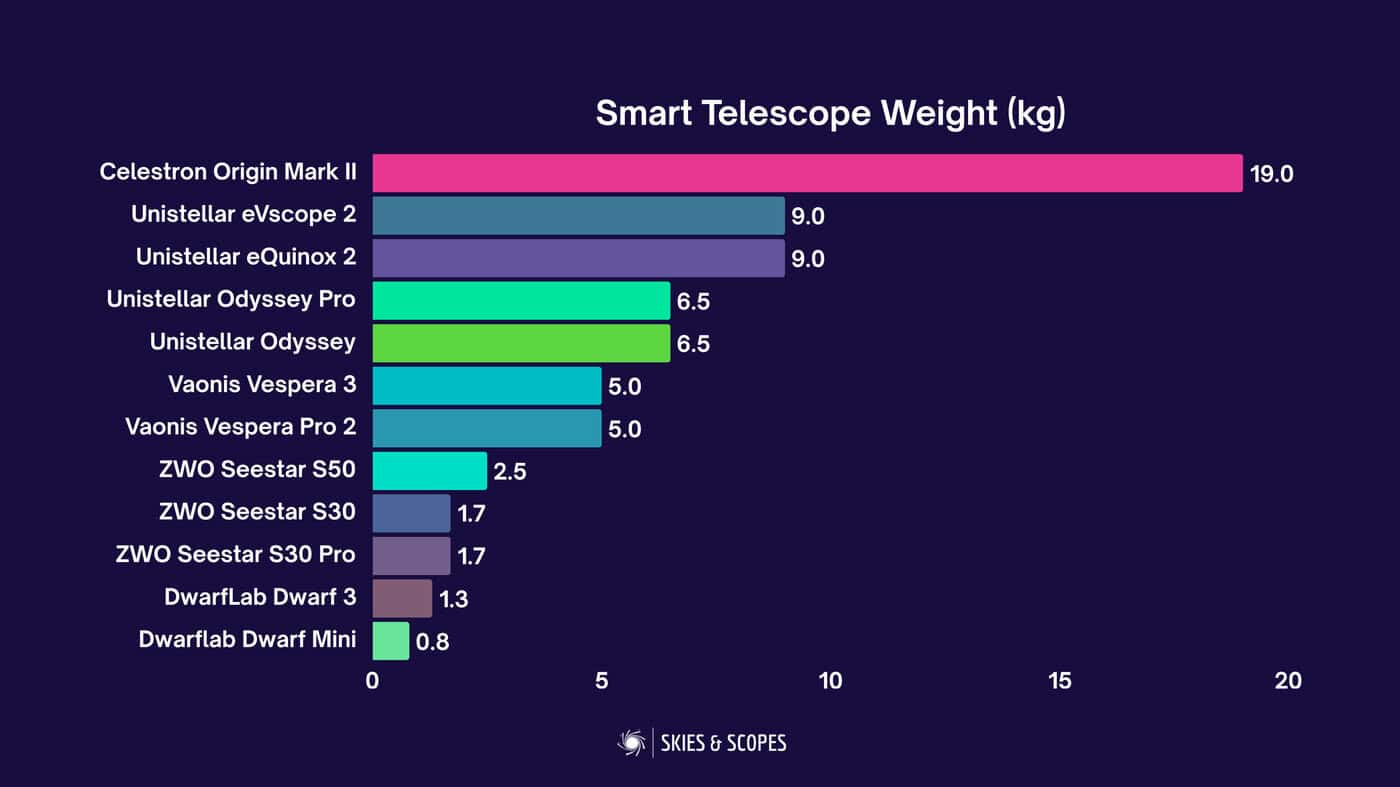
- Similar size and weight to the original S50
“The S50 Pro will be white and will cost more — the CEO confirmed it, but the final price hasn’t been announced yet.”
What the Seestar CEO Confirmed
The Space Koala channel conducted an interview with the Seestar CEO at a recent astronomy conference — watch it above — which added a few more confirmed details.
Design: The S50 Pro will be white, matching the S30 and S30 Pro rather than the black finish of the original S50.
Price: Expect a significant increase.
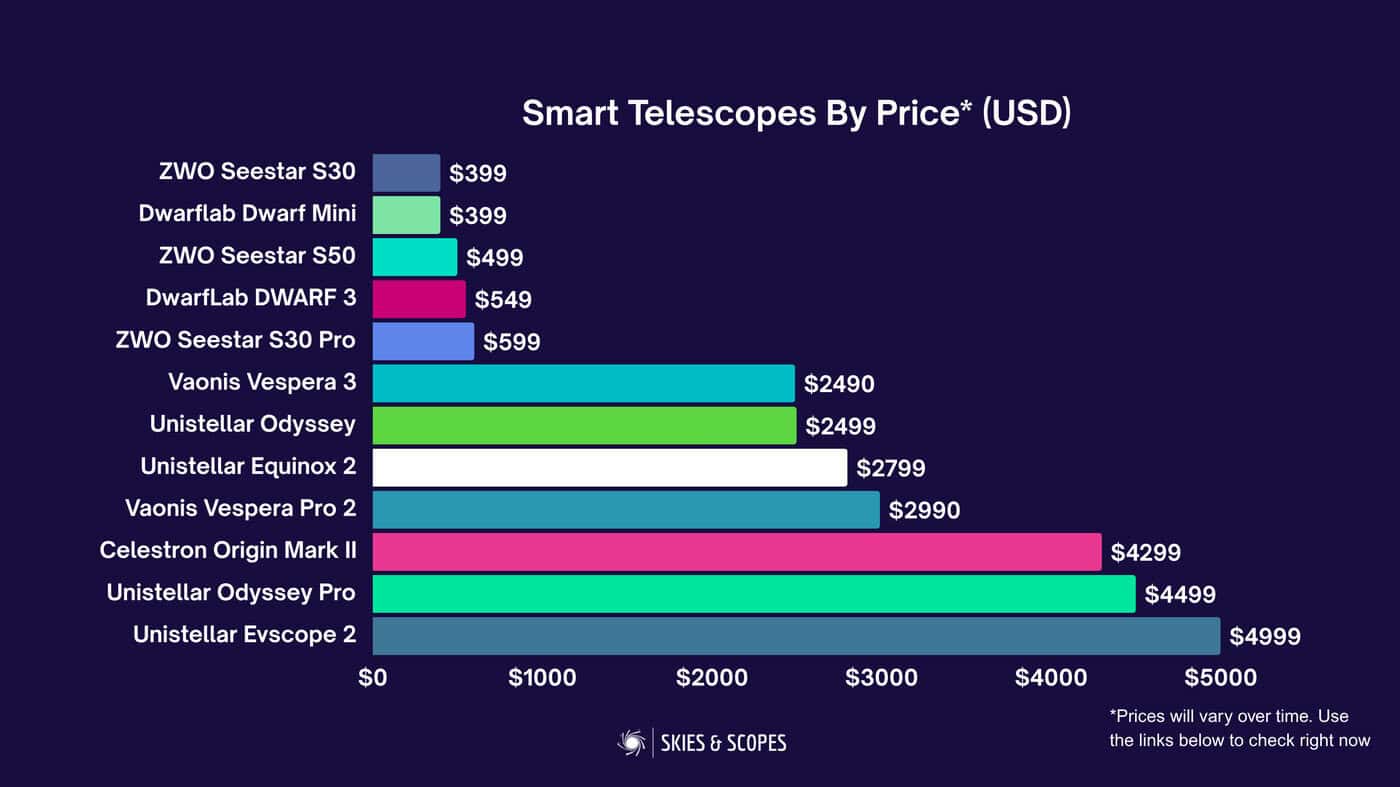
The S30 Pro launched at $599 — up 50% from $399 for the S30.
The S50 sold for $499 before it was discontinued.
Applying similar logic, the S50 Pro could land somewhere between $749 and $999, maybe more.
That is a rough estimate, but it would make it the most expensive budget smart telescope on the market — while still sitting well below the next tier.
The Vaonis Vespera 3 and Unistellar Odyssey start at around $2,500.
Future plans: The CEO also mentioned that ZWO is exploring higher-aperture models — potentially 70 mm or even 80 mm — but these are some way off.
If you are planning to buy a smart telescope this year, I would not factor those in.
Note: prices vary by region and change over time — use the links below for current figures.
Which Smart Telescope Should You Buy Right Now?
If you are looking to buy now rather than wait for the S50 Pro, here is how the current market breaks down.
Budget ($400–$600)
The Dwarflab Dwarf Mini and Seestar S30 are solid entry points at around $399.
If you can stretch further, the Seestar S30 Pro and Dwarflab Dwarf 3 are both meaningfully better.
I slightly favour the Dwarf 3, but both have strong supporters — see the comparison linked below.
Premium (~$2,500)
The Vaonis Vespera 3 and Unistellar Odyssey sit here.
These are genuine upgrades — slicker apps, higher specs, and a noticeably more polished overall experience.
The price gap from the budget tier is real, but so is the improvement.
Top end ($4,000+)
For the very best, I’d recommend either the Celestron Origin Mark II — the best for pure astrophotography image quality, though considerably heavier than other smart telescopes — or the Unistellar Odyssey Pro, which stands out for sharing with others thanks to its built-in eyepiece.
When the S50 Pro arrives, it looks set to sit between the current budget and premium tiers.
The largest aperture of any budget smart telescope, paired with a competitive camera sensor, at a price that should still be well below the Vespera and Unistellar models.