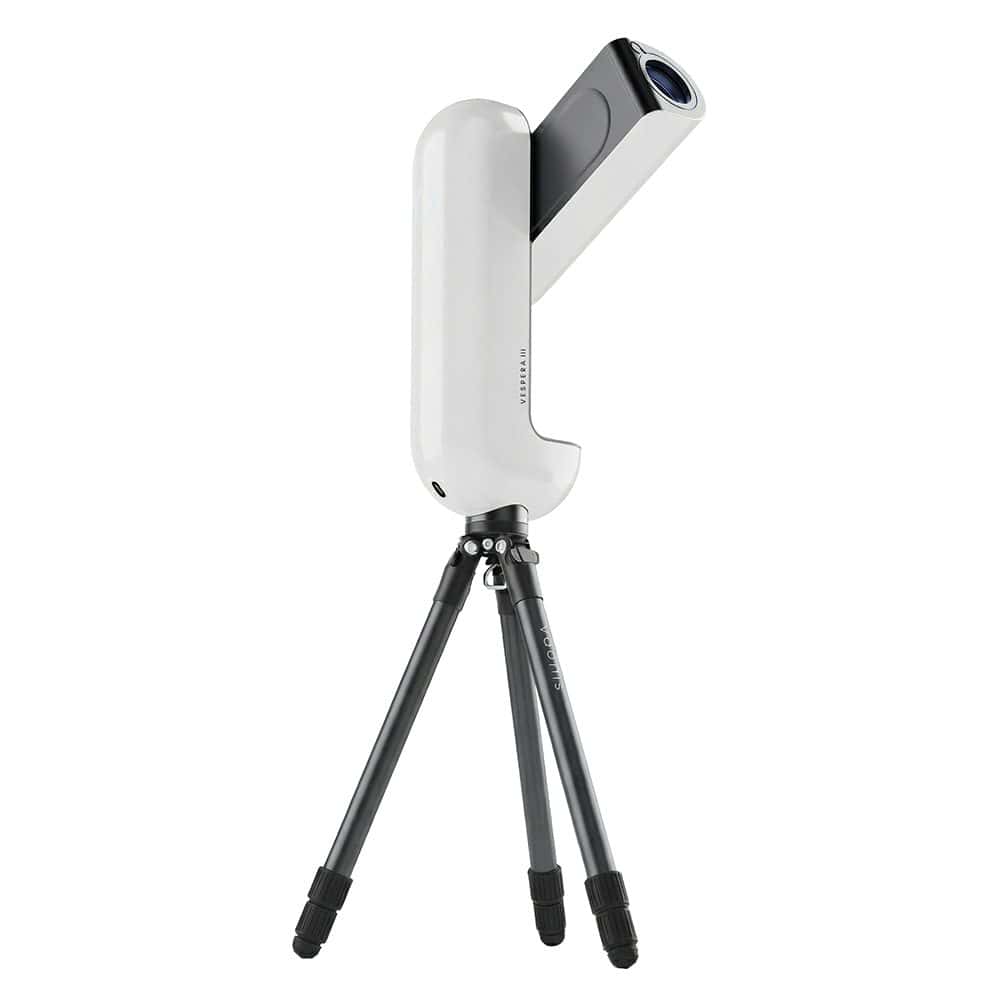
Vaonis has just released two new smart telescopes — the Vespera 3 and the Vespera Pro 2.
They replace the Vespera 2 and the original Vespera Pro, both released in 2024.
Here’s what’s changed, how they compare to the rest of the market, and which one (if any) is right for you.
“The Vespera 3 now has 11 hours of battery life — the longest of any smart telescope on the market.”
What’s New with the Vespera 3
The Vespera 3 is a direct replacement for the Vespera 2 (read our review).
At first glance the two look very similar — same build, same 5 kg weight, same 50 mm aperture, and the same camera sensor.
The headline upgrade is in the optics: Vaonis has improved the internal lens elements for better light gathering, improved colour handling, and added shielding from urban light pollution.
The result should be meaningfully better images even before you touch anything else.
Beyond the optics, there are several practical fixes.
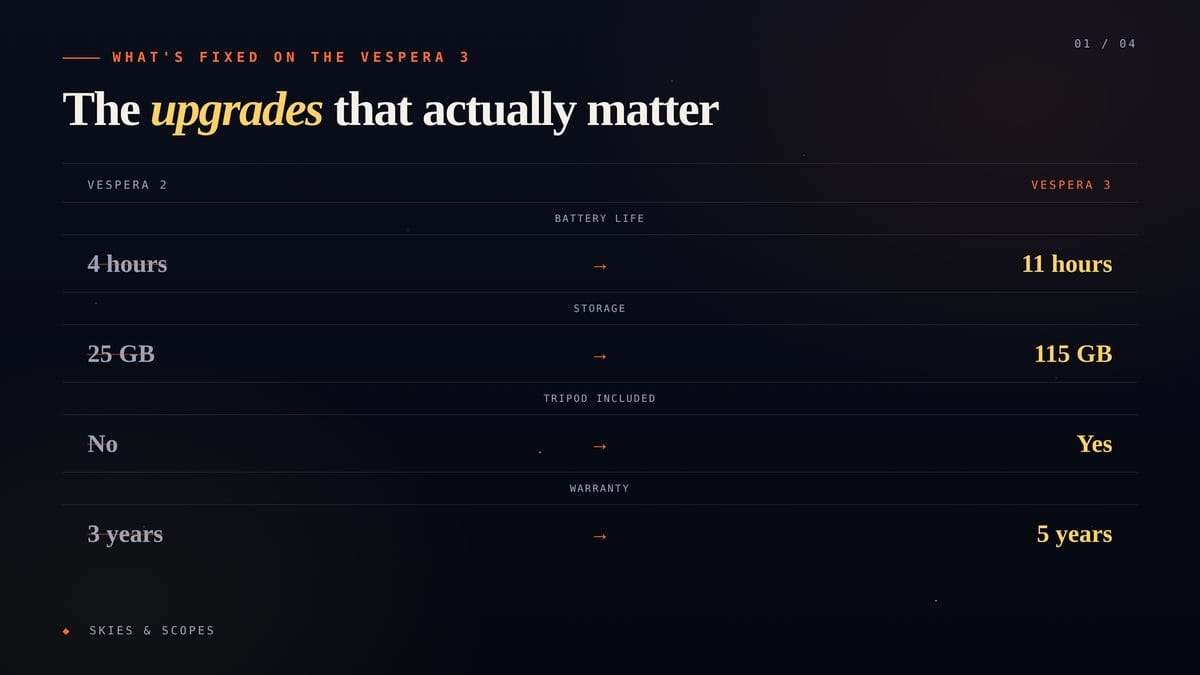
The Vespera 2 didn’t include a tripod, which was an odd omission for a device sold as an all-in-one solution.
The Vespera 3 ships with an aluminium tripod.
Battery life has also been addressed dramatically — up from 4 hours on the Vespera 2 to 11 hours, the longest of any smart telescope currently available.
You can set it running for the night, plan your targets in the app, and wake up to a full session’s worth of data.
Other improvements include a jump in onboard storage from 25 GB to 115 GB, a built-in anti-fog device (triggered automatically by humidity and temperature sensors), and an extended warranty — up from 3 years to 5.
The catch is the price.
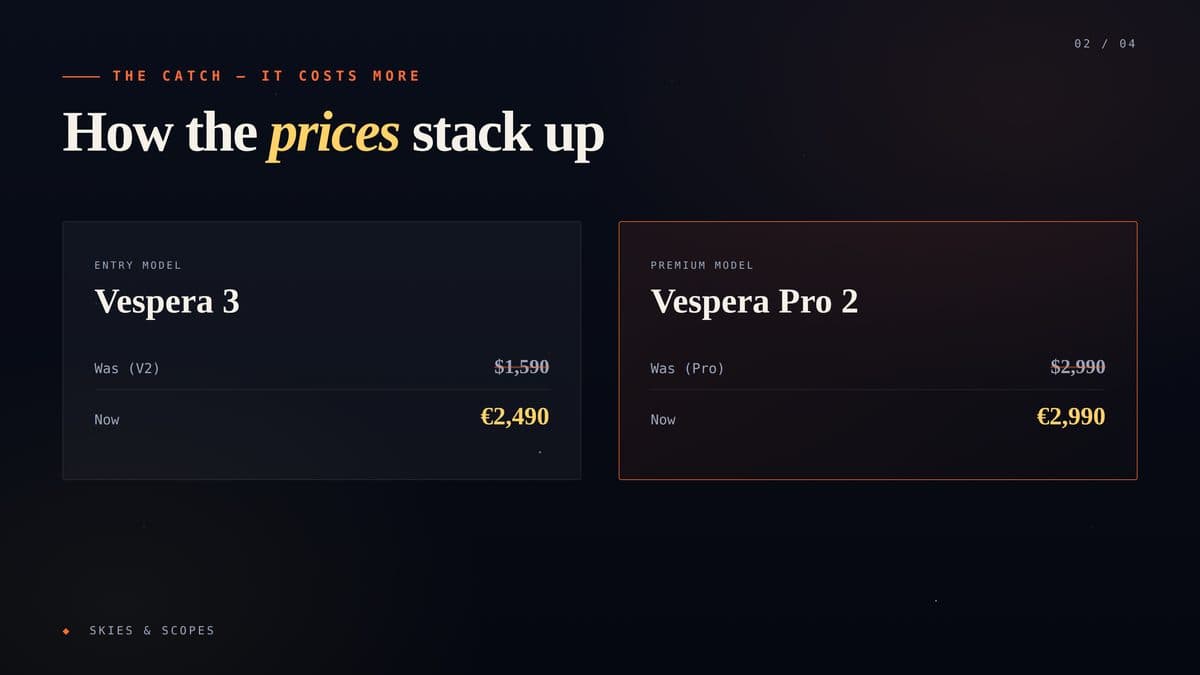
The Vespera 2 retailed for $1,590. The Vespera 3 has launched at €2,490 — a significant jump for what is fundamentally the same telescope with targeted improvements.
Check the links below for current pricing from different retailers.
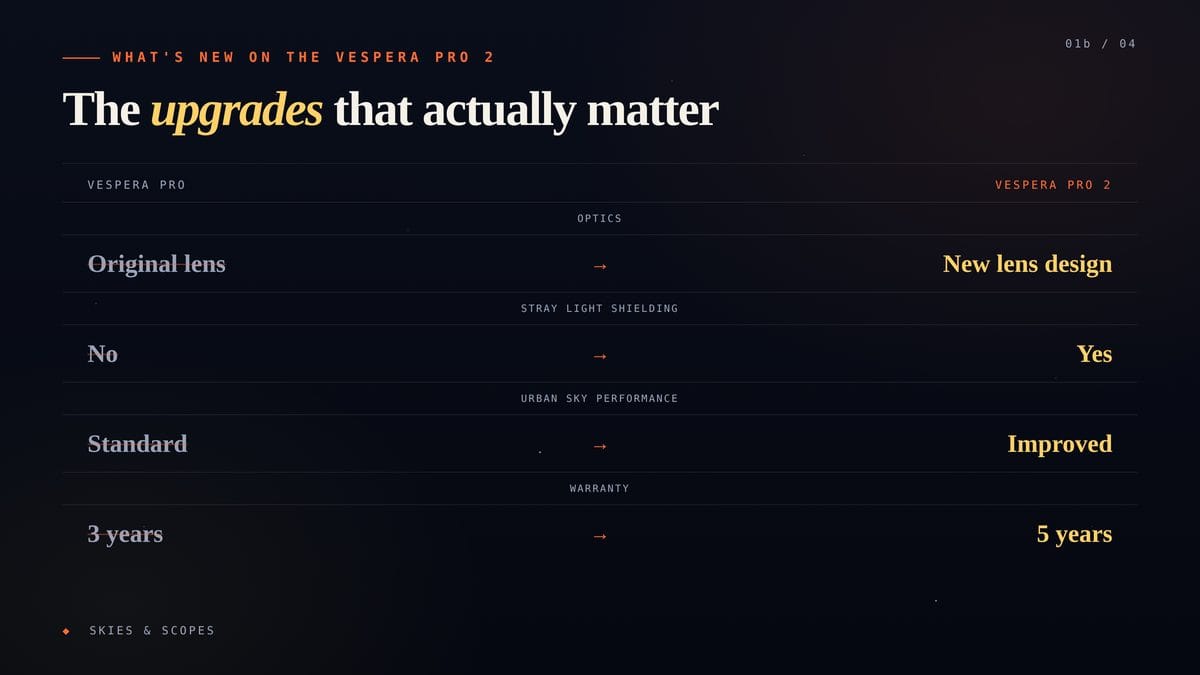
“The Vespera Pro 2 gets the same optical upgrade — at the same price as its predecessor.”
What’s New with the Vespera Pro 2
The Vespera Pro 2 tells a different story to its sibling.
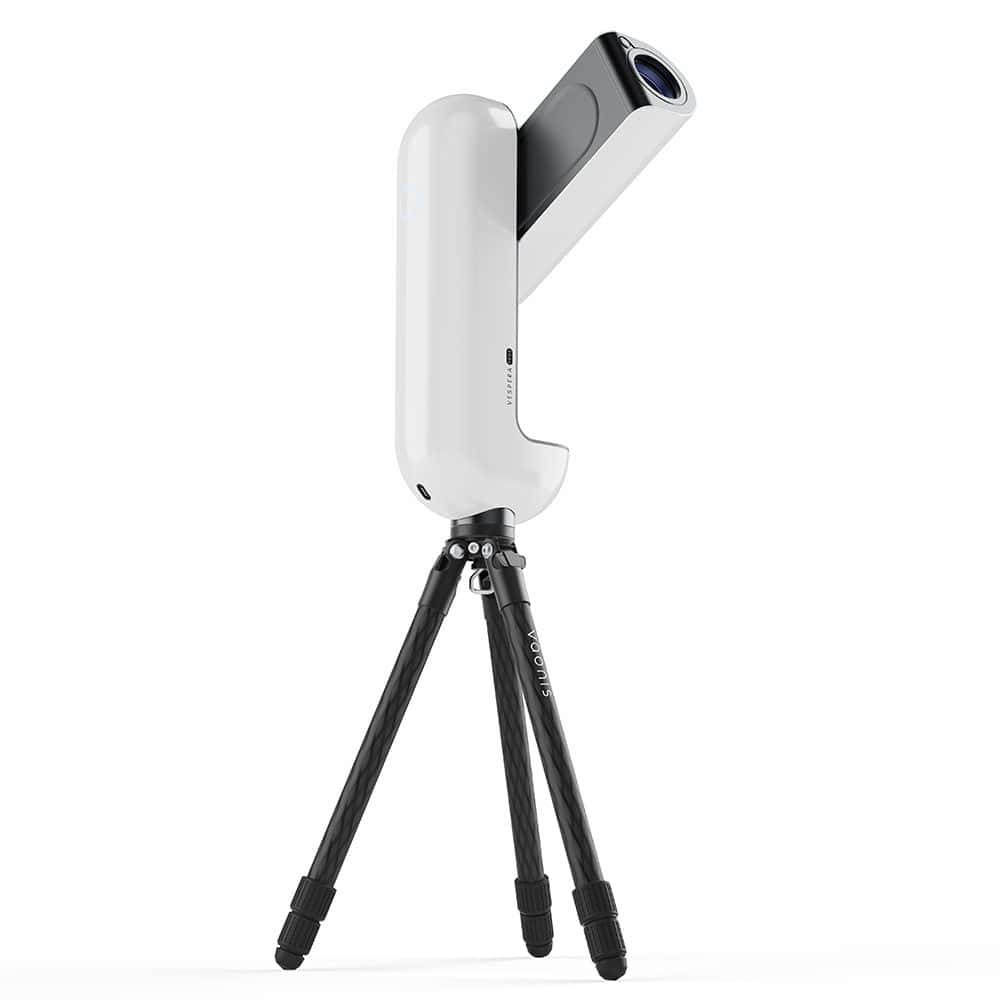
Its predecessor, the Vespera Pro (read our review) already had most of what the Vespera 3 gained — an 11-hour battery, a carbon fibre tripod, large onboard storage, and the highest megapixel camera sensor of any smart telescope currently available.
All of that carries over unchanged.
The sole upgrade is the same improved optics package as the Vespera 3: better light gathering, improved colour rendering, and urban light pollution shielding.
It’s a genuine improvement, even if it’s the only one.
What makes the Vespera Pro 2 easy to recommend is the price — it launches at €2,990, the same as the original Vespera Pro.
You get a better telescope for the same money.
How Do They Compare to Other Smart Telescopes?
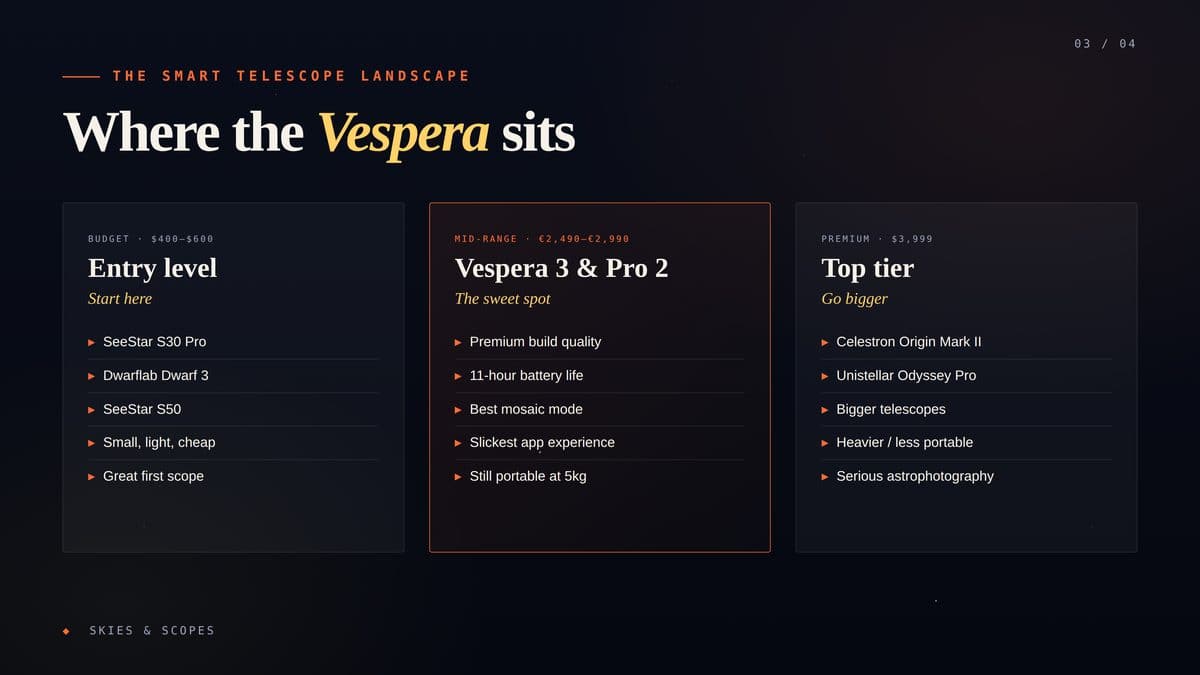
When evaluating any smart telescope, it helps to think in three tiers: budget, mid-range, and premium.
Budget (~$500–$600)
- ZWO SeeStar S30 Pro ($599) — compact, capable, and great value. The app takes some getting used to but it’s an excellent entry point. Read our SeeStar S30 Pro review.
- Dwarflab Dwarf 3 — similarly priced, small and portable. Also requires a bit of patience with the app.
Mid-range (Vespera models)
The Vespera 3 and Vespera Pro 2 sit here.
The optics are better, the app experience is noticeably slicker, and the overall build quality is a step up.
The gap is real — but so is the price difference.
Premium ($4,000+)
- Celestron Origin Mark II (~$3,999) — a 6-inch telescope that produces the best astrophotography images of any smart telescope. The downside: it weighs over 40 lbs and isn’t portable in the way the Vespera models are. Read our Celestron Origin Mark II review.
- Unistellar Odyssey Pro (~$3,999) — an 85 mm telescope with a built-in eyepiece. You look through it and see the digital image building in real time — galaxies and nebulae getting sharper the longer you observe. Far more impressive for sharing with friends or family than showing them a phone screen. Read our Unistellar Odyssey Pro review.
“Between the two, the Vespera Pro 2 is the stronger value proposition — a better sensor, the same optical upgrade, no price increase.”
Which One Should You Buy?
Your budget is the biggest factor.
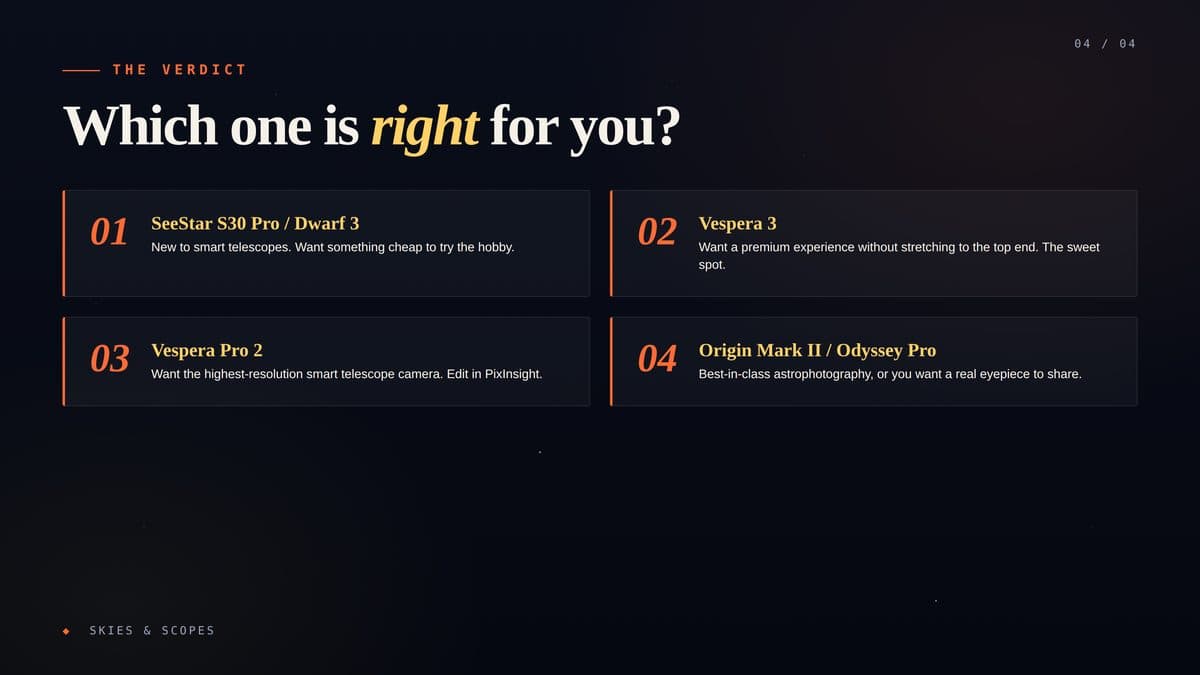
Buy a SeeStar S30 Pro or Dwarf 3 if you’re new to this and want to try the hobby before committing to a bigger spend.
At $500–$600 they’re genuinely capable scopes.
Buy the Vespera 3 if you want a premium smart telescope experience without stretching to the top end.
The Vespera 2 was great but had real frustrations — the short battery and the missing tripod.
The Vespera 3 fixes both.
For most people considering Vaonis, this is the sweet spot.
Buy the Vespera Pro 2 if you want the highest-resolution camera sensor of any smart telescope and you plan to edit your images in software like PixInsight afterwards.
You also get the nicer carbon fibre tripod and the same price as before — no premium for the upgrade.
Buy the Celestron Origin Mark II if astrophotography image quality is your absolute priority and weight doesn’t matter.
Buy the Unistellar Odyssey Pro if you want that eyepiece experience for sharing with family or friends at a star party.
“The Vespera 3 now has 11 hours of battery life — the longest of any smart telescope on the market.”
Related Content
- Best Smart Telescopes: Full Comparison & Buying Guide
- Vaonis Vespera 2 Review
- Vaonis Vespera Pro Review
- Unistellar Odyssey Pro Review
- Celestron Origin Mark II Review
- ZWO SeeStar S30 Pro vs Dwarf 3 Comparison
- 5 Best Budget Smart Telescopes
- Best Smart Telescope 2026: Full Buyer’s Guide
- Vespera 2 vs Vespera Pro: Which One to Buy?