We analyzed 986 images shortlisted for the Astronomy Photographer of the Year competition in the past seven years to find the Best Cameras for Night Sky Photography in 2026.
Our top pick is the Sony A7 III:
- It was the most used camera in both the Astronomy Photographer of the Year AND Milky Way Photographer of the Year competitions in 2024
- It is used by some of the most successful astrophotographers today as demonstrated in multiple Skies & Scopes case studies
- Is great value compared to many of the premium alternatives
See our top recommendations below or read on for the full data and analysis:
Value Pick 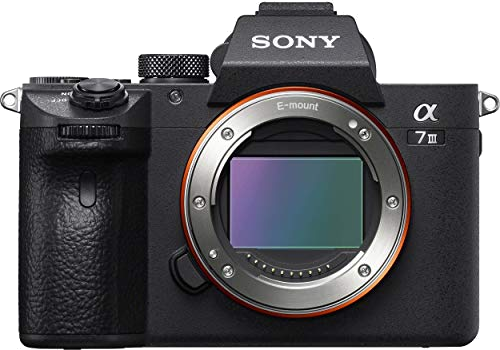 | Premium Pick 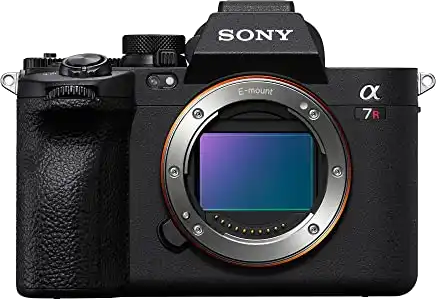 | Brand New 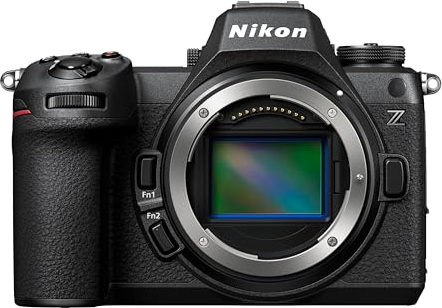 | Budget Pick 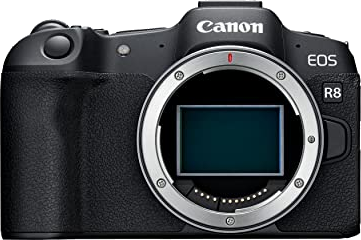 |
Make & Model: Sony A7 III | Make & Model: Sony A7R V | Make & Model: Nikon Z6 III | Make & Model: Canon EOS R8 |
Type: Mirrorless | Type: Mirrorless | Type: Mirrorless | Type: Mirrorless |
Sensor type: Full-frame | Sensor type: Full-frame | Sensor type: Full-frame | Sensor type: Full-frame |
Sensor size: 24.2 MP | Sensor size: 61 MP | Sensor size: 24.5 MP | Sensor size: 24.2 MP |
Year of release: 2019 | Year of release: 2022 | Year of release: 2024 | Year of release: 2023 |
How we made these recommendations
We analyzed all 986 images shortlisted for the Astronomy Photographer of the Year competition for the past seven years (2018 to 2024) to see what cameras were used.
Of these 986 images, 366 were landscape astrophotography images (rather than deep sky or planetary photography) and this is the data set we have used.
The Best Night Sky Cameras
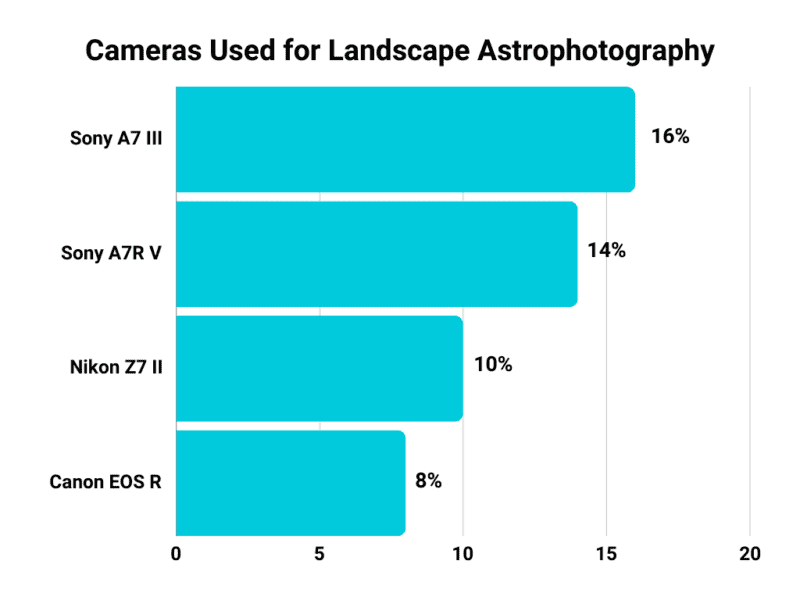
The top most used cameras in shortlisted landscape astrophotography images in 2024 were (in this order):
Common Characteristics
These top models all share certain traits:
- They are all Sony, Nikon or Canon models: Nearly all landscape astrophotography images shortlisted in this competition are from these brands. Very few high-performing astrophotographers use other brands.
- They are all Full-Frame sensor models: Full-Frame cameras perform better in low-light and allow you to capture a wider expanse of the night sky when shootings as they do not “crop” the view like APS-C sensor cameras.
- They are all Mirrorless: There is no inherent advantage in astrophotography of a Mirrorless over a DSLR but Mirrorless cameras have got better and more affordable in recent years and are now preferred by most.
Essentially, if you pick a camera that ticks all three of these boxes then it can definitely perform for night sky photography.
Advantages come in the models most used here in terms of things like better batteries for long sessions with long exposures, better menus and usability, and better bodies for usability at night.
Now we’ll dig a little into each of these models.
Sony A7 III
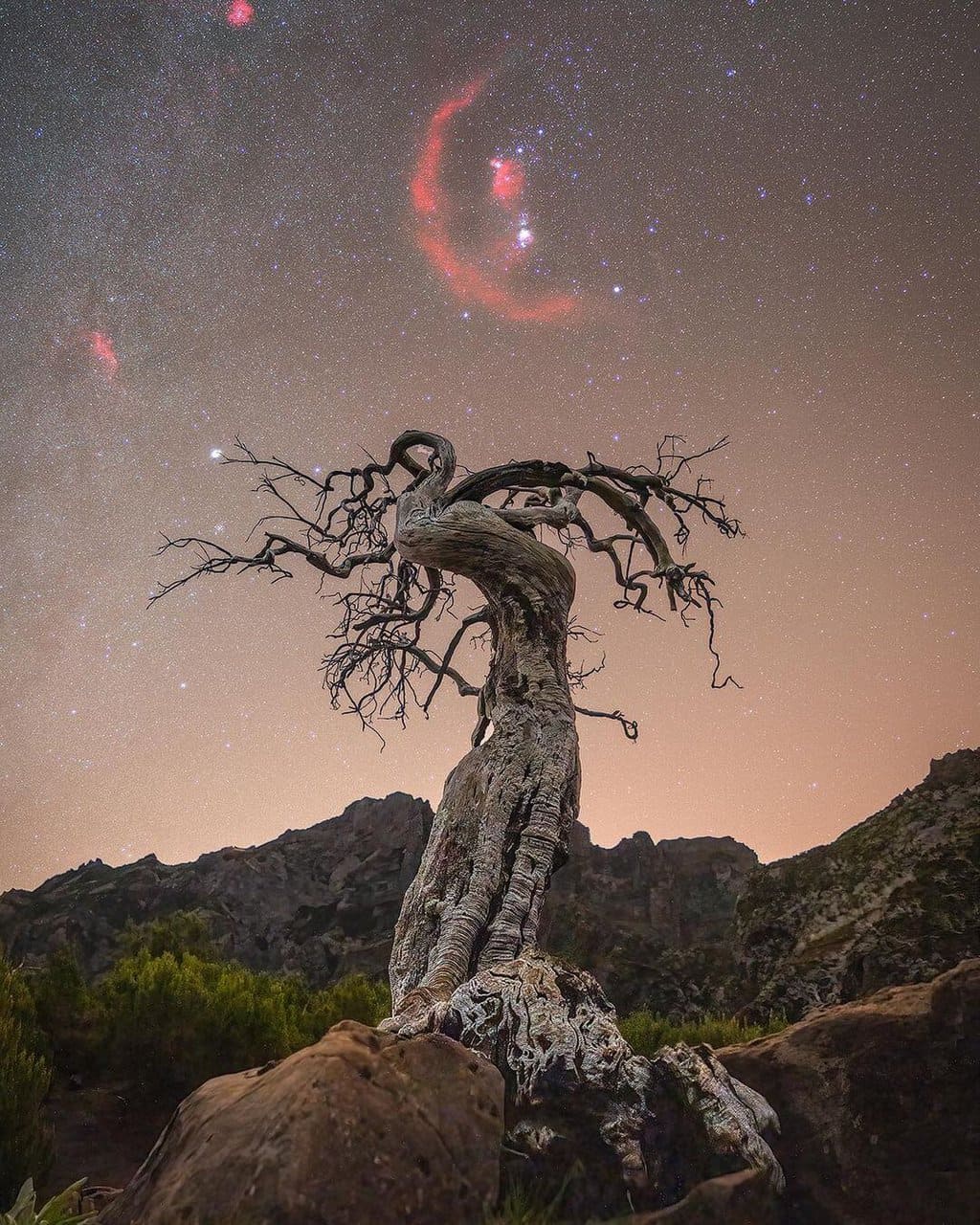
The Sony A7 III is not only top in our Astronomy Photographer of the Year data but we also did another analysis of the gear used in the Milky Way Photographer of the Year competition in 2024 — and it topped the list again in our Milky Way Photographer of the Year 2026 gear analysis too.
If you need any further evidence, here are links to nine case studies from some of the most successful astrophotographers in the world today demonstrating their work with the Sony A7 III:
- Mihail Minkov
- Rositsa Dimitrova
- Daniel Viñé Garcia
- Burak Esenbey
- Alexis Trigo
- Felix Heisig
- Jakob Sahner
- Camille Niel
- Joao Yordanov Serralheiro
The A7 III was released initially in 2018, and its age is partly why it is relatively more affordable than the latest models like the Sony A7 IV or Sony A7R V.
It also improved upon its predecessor, the Sony A7 II, in terms of battery life and body and menu usability.
Therefore it hits the sweet spot in terms of performance and value.
Full-Frame Mirrorless Interchangeable Lens Camera
- No.1 Camera in Astronomy Photographer of the Year
- Light Weight, High-Quality
- 24.2 Megapixel Resolution
- Sony UX can be hard to master
Sony A7R V
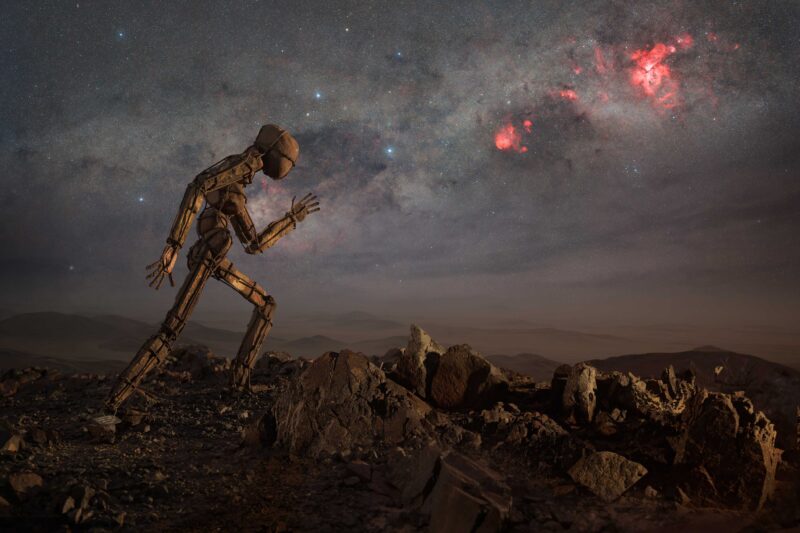
This is the latest and greatest Sony model and so is our premium pick.
It has a huge 61 megapixel resolution – the “R” in the name stands for “resolution”.
It’s one of the best cameras available today but it comes for a premium price!
You can see here a case study with Vikas Chander demonstrating use of this camera for astrophotography.
See also these night sky photography case studies using the older Sony A7R III:
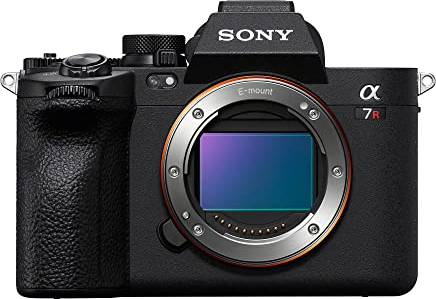
Full-Frame Mirrorless Interchangeable Lens Camera
- Top Sony model
- 61.0 MP full-frame sensor
- High performing for astrophotography
- Premium Price
Nikon Z6 III
The Nikon Z6 III is the top pick if you have a preference for Nikon models.
For example, familiarity with the UX or just because you already own good Nikon lenses.
The Z6 III improved on the original Z6 and Z6 II in a couple of ways that improve its performance for astrophotography:
- You can take long exposures of up to 15 minutes without using an external intervalometer, whereas the original Z6 had this capped at 30 seconds, which is quite limiting for long-exposure photography in low light.
- When you turn the Z6 III off and back on again it remembers your last focus settings. This is great if you are using it mostly for astrophotography and want to be able to pick up where you left off on a previous night.
- The Z6 III features StarLight View mode to aid focusing and composition of nightscape photography
FX-Format Mirrorless Camera
- The latest and greatest version in Nikon's Z6 series
- Starlight View mode to aid focusing and composition for night sky photography
- 24.5 MP full-frame sensor
- Fairly expensive
- Lower resolution than the Z7 II
Canon EOS R8
The Canon EOS R8 is a great night sky camera and the most affordable from Canon’s full-frame mirrorless range.
Full-Frame Mirrorless Hybrid Camera
- 24.2 Megapixel CMOS Image Sensor
- Light weight
- Affordable price
Astro-Modification
One thing to note is that many advanced landscape astrophotographers use astro-modified versions of these cameras.
Astro modified cameras are regular DSLR or mirrorless cameras where part of the infrared filter has been removed to allow it to process color from astronomical objects better. You can read more about this here.
Many of the photographers in the case studies cited throughout this article used astro-modified models.
This is something you might want to consider later in your astrophotography journey using a service like Life Pixel.
You can also buy pre-astro modified versions of the cameras recommended in this article from some retailers. Check these links:
- Sony A7 III Astro-Modified
- Sony A7R V Astro-Modified
- Nikon Z7 II Astro-Modified
- Nikon Z6 II Astro-Modified
- Canon EOS R Astro-Modified
Night Sky Photography Cameras FAQs
Are DSLR or mirrorless cameras better for astrophotography?
Mirrorless cameras are increasingly used for astrophotography. However, neither mirrorless nor DSLRs are inherently better for this.
DSLRs have been the most popular camera type for photographers in the past decade as mirrorless cameras were more expensive, but technological advances have been bringing down their prices in recent years.
Mirrorless cameras do not have an optical mirror like a DSLR (hence the name) and tend to be smaller and lighter.
They feature an electronic viewfinder that displays what the camera image sensor sees, which can be a real bonus when composing shots and focusing on objects in the night sky. Like DSLRs, mirrorless cameras can be used with interchangeable lenses.
On the other hand, DSLRs often have better battery life, and work with a larger range of lenses.
You can read more on this here: DSLR vs Mirrorless Cameras for Astrophotography.
Are Full-Frame or APS-C sensor cameras better for astrophotography?
Full-frame cameras are best for astrophotography – especially landscape astrophotography.
From our research, we found out that 100% of the Astronomy Photographer of the Year finalists’ landscape astrophotography photos were taken with full-frame cameras in 2024.
As discussed above, full-frame cameras are generally better for astrophotography due to better performance in low-light conditions compared to crop sensor (APS-C) cameras.
In particular, they work better when using high ISO settings. In comparison at similar ISO levels, images from APS-C cameras will suffer from greater “noise” (a sort of graining on the image).
The full frame also gives you a wider field of view which is essential for landscape astrophotography when capturing a wide expanse of the sky in your images.
You can read a more in-depth analysis of this in our article, Full Frame vs APS-C: What’s Best for Astrophotography?
What’s the best budget camera for astrophotography?
A used Canon EOS 6D is our recommendation as the best budget camera for astrophotography.
If you don’t want a used camera, or just not one that is as old as this, then another option is to go for older versions of the top full-frame models, like the Sony A7 or Sony A7 II.
In our opinion, this is better than getting a new APS-C sensor camera just because it is cheaper.
What’s the best DSLR camera for astrophotography?
Our data shows that the best DSLRs for astrophotography are the:
What’s the best beginner camera for astrophotography?
The best astrophotography camera for beginners depends on your budget but there are a few options:
- If you have a DSLR or mirrorless camera already then start with that, even if it has a crop sensor (APS-C). No need to buy something new if you are just experimenting at the start – you can get results with any camera (even a smartphone).
- If you want to buy something relatively budget then look at a used Canon EOS 6D or Sony A7 or Sony A7 II.
- If cost is not an issue then probably go for one of the relatively cheaper models we have recommended at the top of this article like the Sony A7 III, Canon EOS R, or Nikon Z6 II.
Do megapixels matter for astrophotography?
Yes, but it is not necessarily that this should be higher to be better.
More megapixels can degrade low-light performance in cameras although with modern high-resolution models this is not an issue.
Our results show that cameras with a megapixel count of around 25 MP are the most successful for astrophotography.
See our article, How Many Megapixels Do You Need For Astrophotography?
What are dedicated astronomy cameras?
Dedicated astronomy cameras are webcam-like objects that are attached to telescopes and are controlled via a laptop or similar external device.
These are also often referred to as CCD cameras or CMOS cameras and are used for deep sky and planetary astrophotography.
If you want to see an analysis of the best dedicated astronomy cameras, see these articles:
What are astro modified cameras?
Astro-modified cameras are DSLR or mirrorless cameras that have been specifically modified for astrophotography.
The sensors in regular cameras are not ideal for capturing the light emitted by nebulae and other DSOs as they filter out certain colors. What can be done is that the sensor can be altered to improve performance in this area.
This can be done manually yourself (which is a bit risky), or by paying for a service from a company like Life Pixel.
There are some discontinued models that have had this alteration done already – the Canon EOS Ra and the Nikon D810a – the “a” in both refers to “astrophotography”. These are hard to find but you may be able to find these on sale on the used market. Check these links:
If you want to read more about modifying cameras for astrophotography, see our article on astro modified cameras and how to get one.
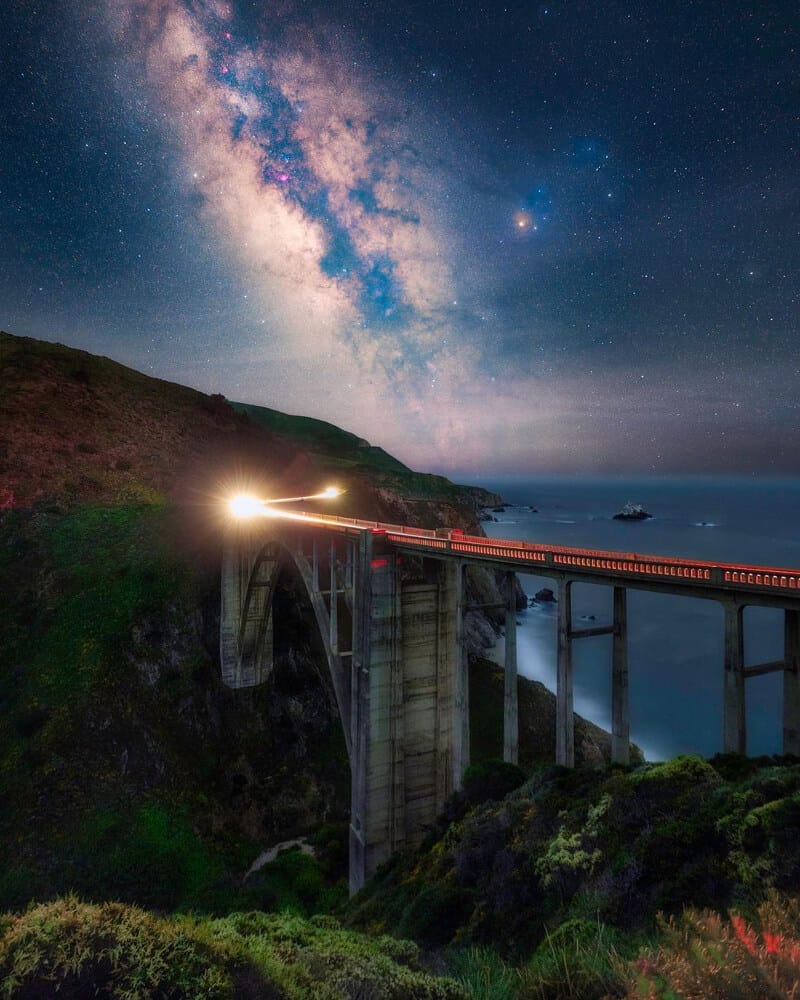
Verdict: Best Cameras for Night Sky Photography
Most other articles or guides on this topic are a fairly random list based on the author’s experience, which is very subjective and limited.
In truth, there is no “best camera” for night sky photography, or any photography for that matter.
However, there are certain models that have been proven to perform and certain characteristics that make a camera more suited to this type of photography.
We looked at over 900 award-nominated astrophotography images and have found the most successful models and their common characteristics.
This adds to the personal experience of the many expert astrophotographers we work with to provide the most trustworthy recommendations. Overall, we recommend:
- Sony A7 III (or Sony A7 IV, if you want the latest version)
- Sony A7R V
- Nikon Z6 III
- Canon EOS R8
You can also see a wider write-up of our analysis of images in the Astronomy Photographer of the Year competition here, covering telescopes and mounts, as well as cameras.
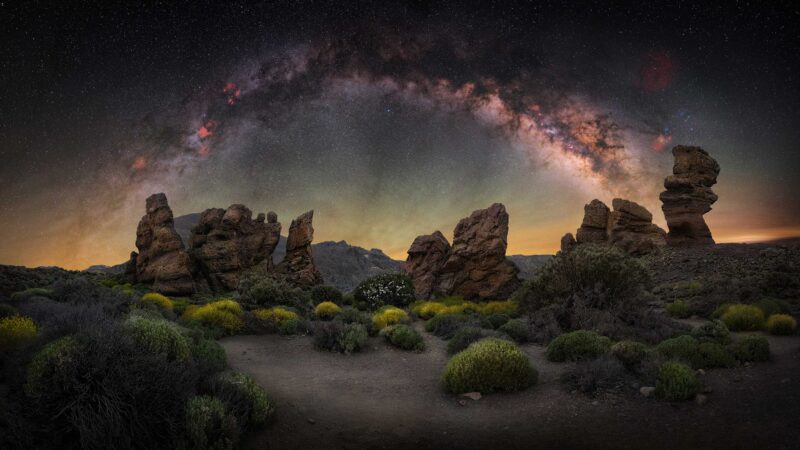
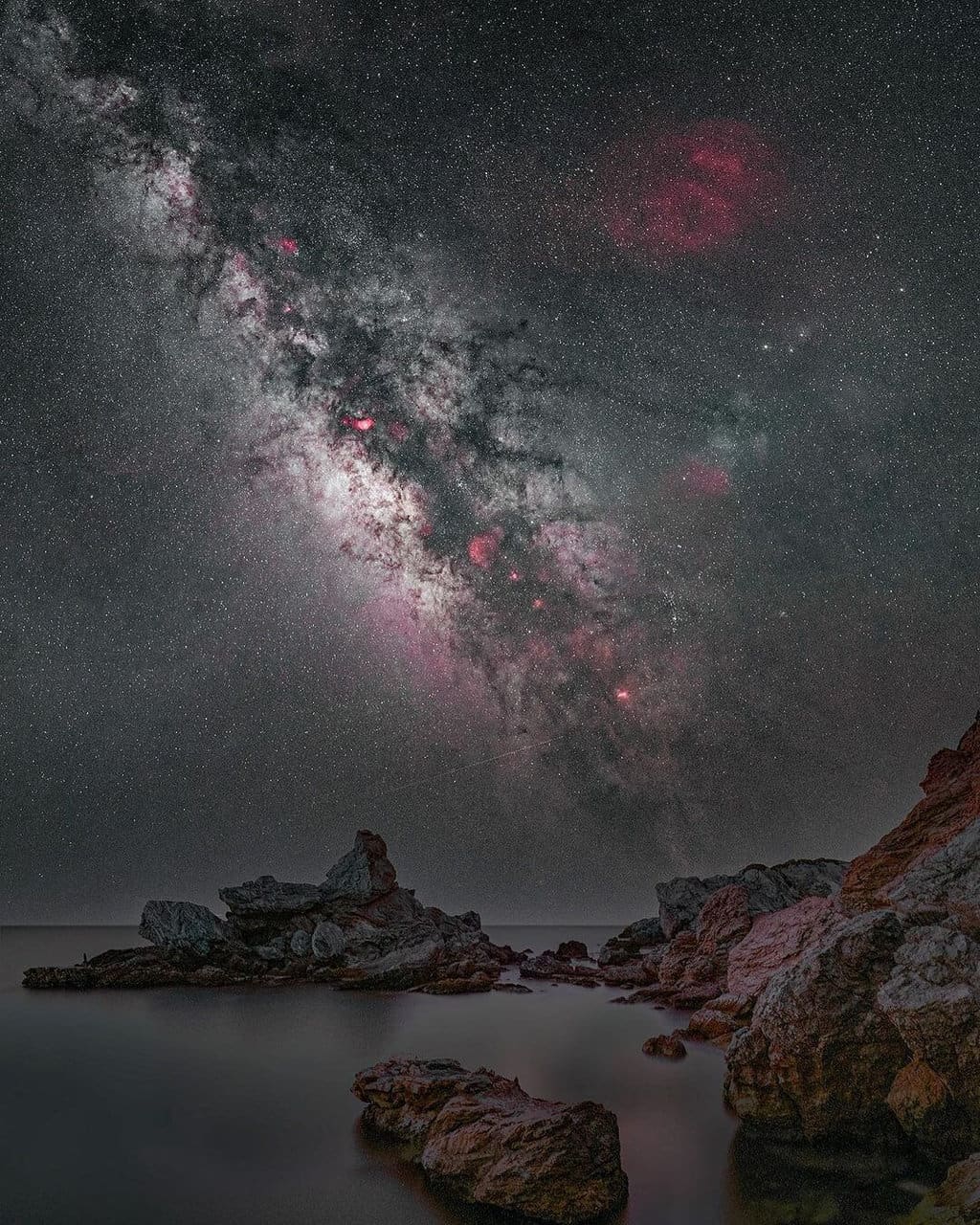
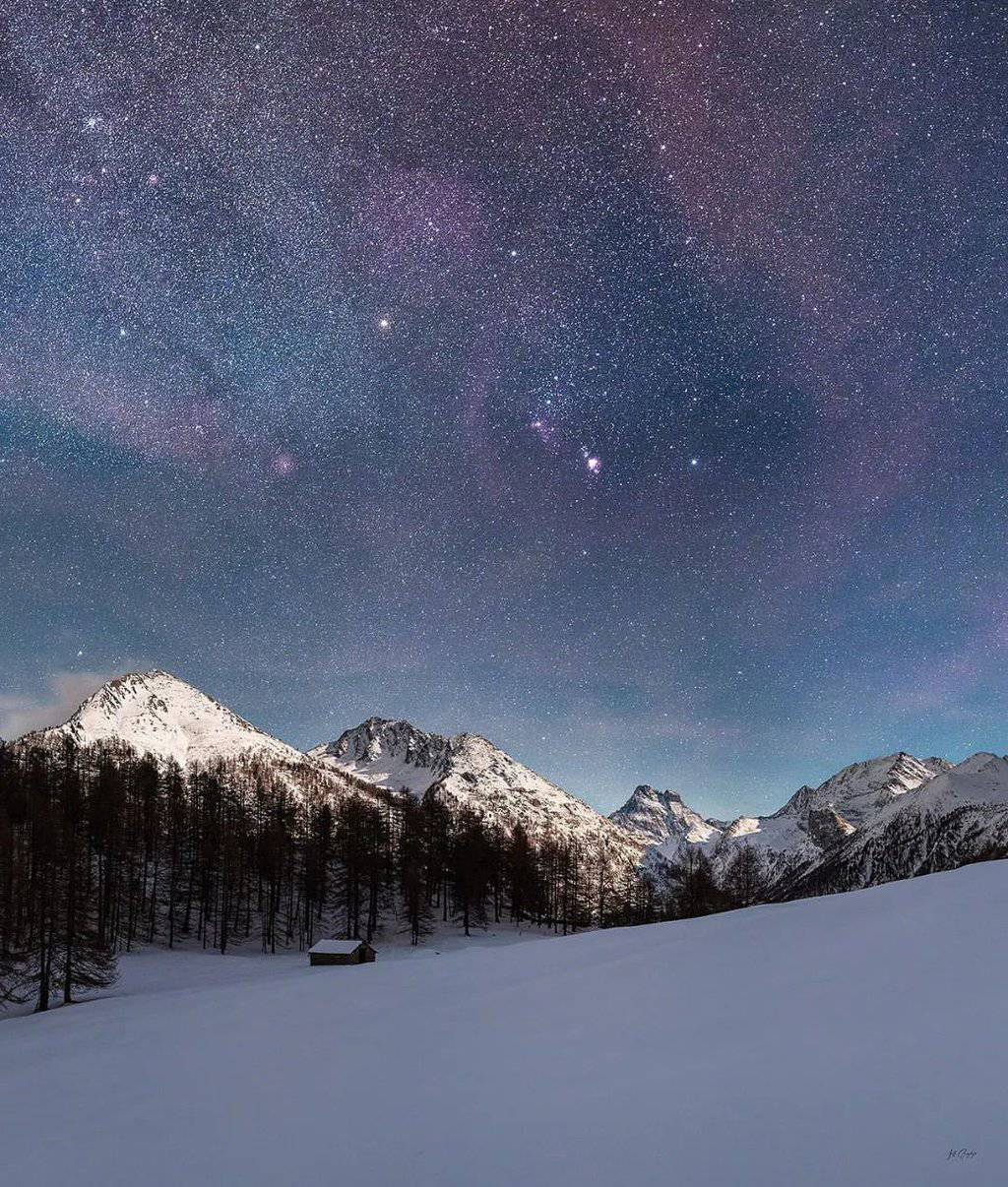
Images in this article are used courtesy of the named photographers and/or Royal Musuems Greenwich who run the Astronomy Photographer of the Year competition.
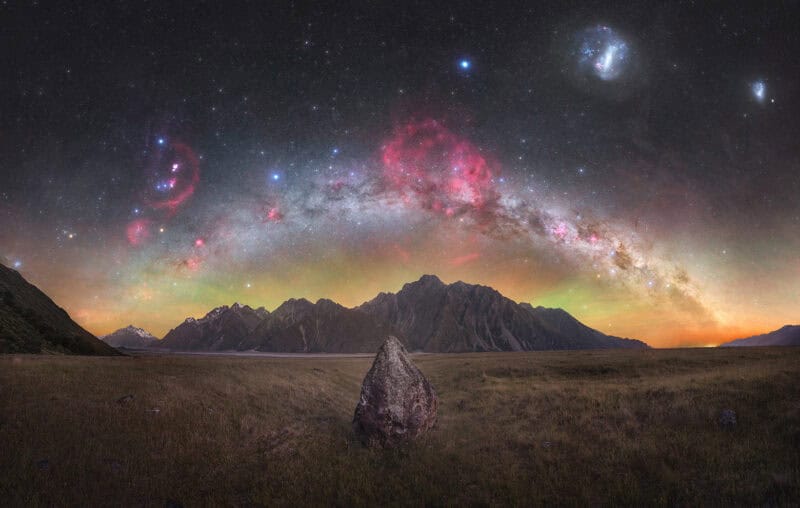
The featured image at the top of this article is Auroral Touch: the Milky Way’s Close Encounter © Chester Hall-Fernandez.