Every year, Capture the Atlas selects 25 of the best Milky Way photos from around the world — the Milky Way Photographer of the Year.
I’ve analyzed the gear used to see what we can learn about what the best night sky photographers in the world are using right now – cameras, lenses, star trackers and tripods.
Key Takeaways
This article uses the data from three consecutive years of winners — 2024, 2025, and 2026 — giving us a dataset of 75 photos and their associated gear lists.
It’s a small but carefully curated sample. Here’s what it tells us:
- Nikon Mirrorless Cameras are gaining in popularity. The Nikon Z6 family have become popular with leading Milky Way photographers, combining full-frame performance with good value.
- Sony A7 III remains the most-used single camera across three years. It’s proven, accessible second-hand, and still producing competition-winning results.
- Full frame rules. Every night sky shot uses a full-frame sensor camera.
- Astro modification makes a difference. 63% of photos were taken with astro-modified cameras — if you’re serious about Milky Way photography, it’s worth investigating long-term.
- Budget lenses can compete. The Viltrox 16mm f/1.8 topping the 2026 lens list shows you don’t need a £1,000+ model to shoot world-class night skies.
- Wider is better. Average focal length is trending down year on year — 14–16mm is the sweet spot for most winners.
- MSM Nomad is the top star tracker in 2026. The small weight and good value mean more are turning to this model.
- There’s no standout tripod, but 100% use carbon fiber.
Now let’s dig a bit more into cameras, lenses, star trackers and tripods in turn.
You can also watch the video version:
Cameras
Brand Share: Nikon’s Mirrorless Models Rising
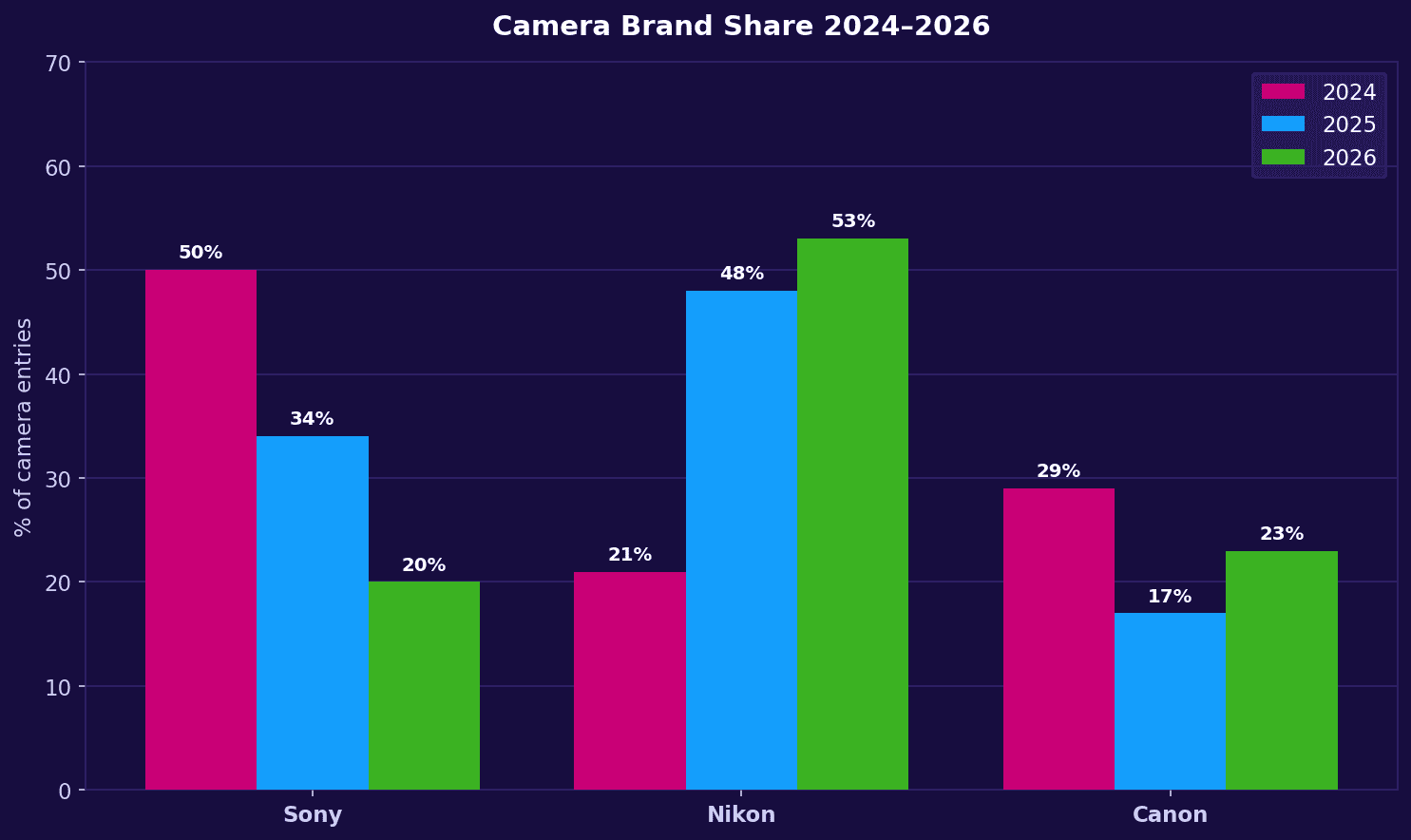
Firstly with cameras, it is notable that Nikon’s mirrorless models are being more commonly used.
Sony dominated in 2024 (50%), fell to 34% in 2025, and dropped further to just 20% in 2026.
Nikon has gone the other direction — rising from 21% to 48% to 53% over the same period.
Sony had a headstart in the mirrorless camera arena, but maybe now Nikon are catching up for night sky photographers?
The Nikon Z6 Family
The Nikon Z6 family — the original Z6, the Z6II, and the new Z6III — appeared in 11 of the 30 camera entries in 2026 (37%).
Over all three years combined, the Z6 line-up accounts for 17 appearances across 75 photos.

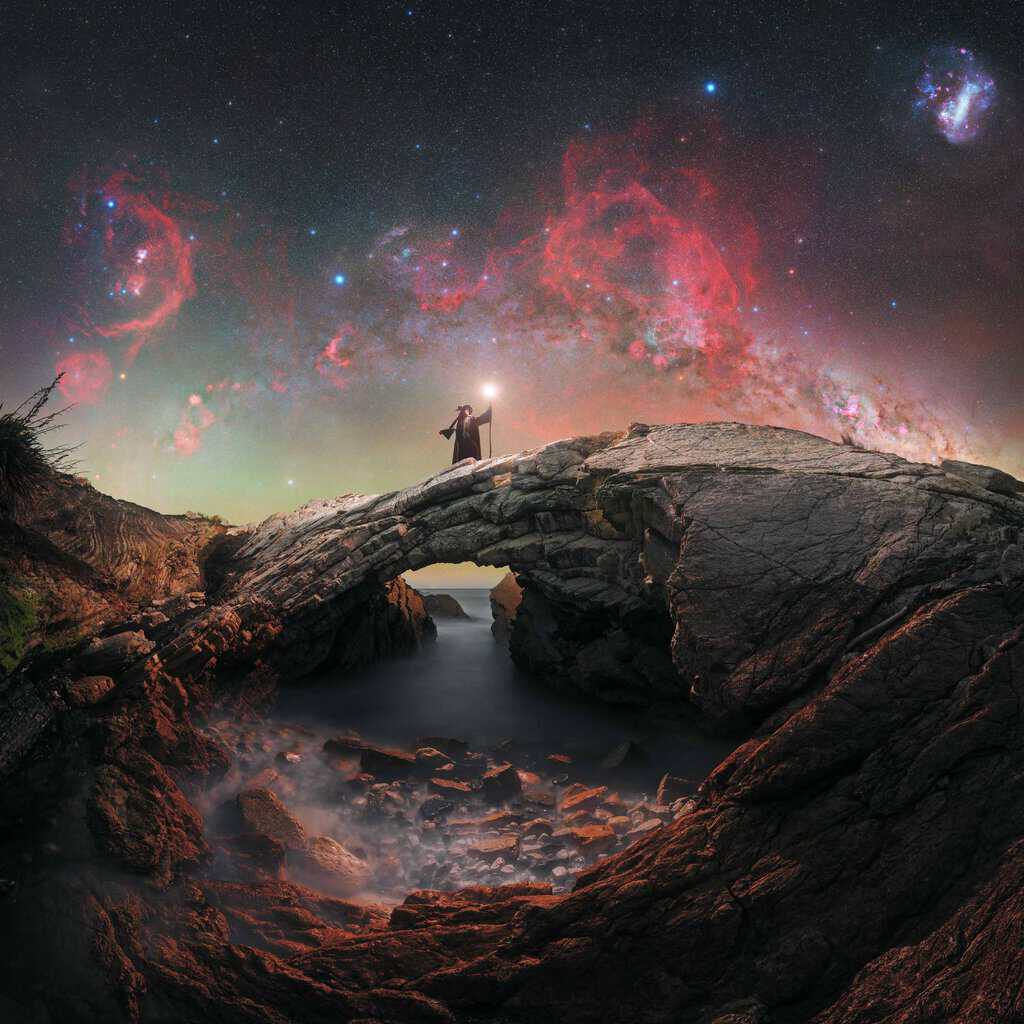
Tom Rae’s “Night at the Remarkables” was shot on an astro-modified Nikon Z6, paired with the Sigma Art 28mm f/1.4 and an iOptron SkyGuider Pro tracker.
The Z6 family’s appeal for astrophotography is clear:
- full-frame sensors
- optimal resolution (not too high, not too low), and
- relative good value for money in comparison to other leading cameras.
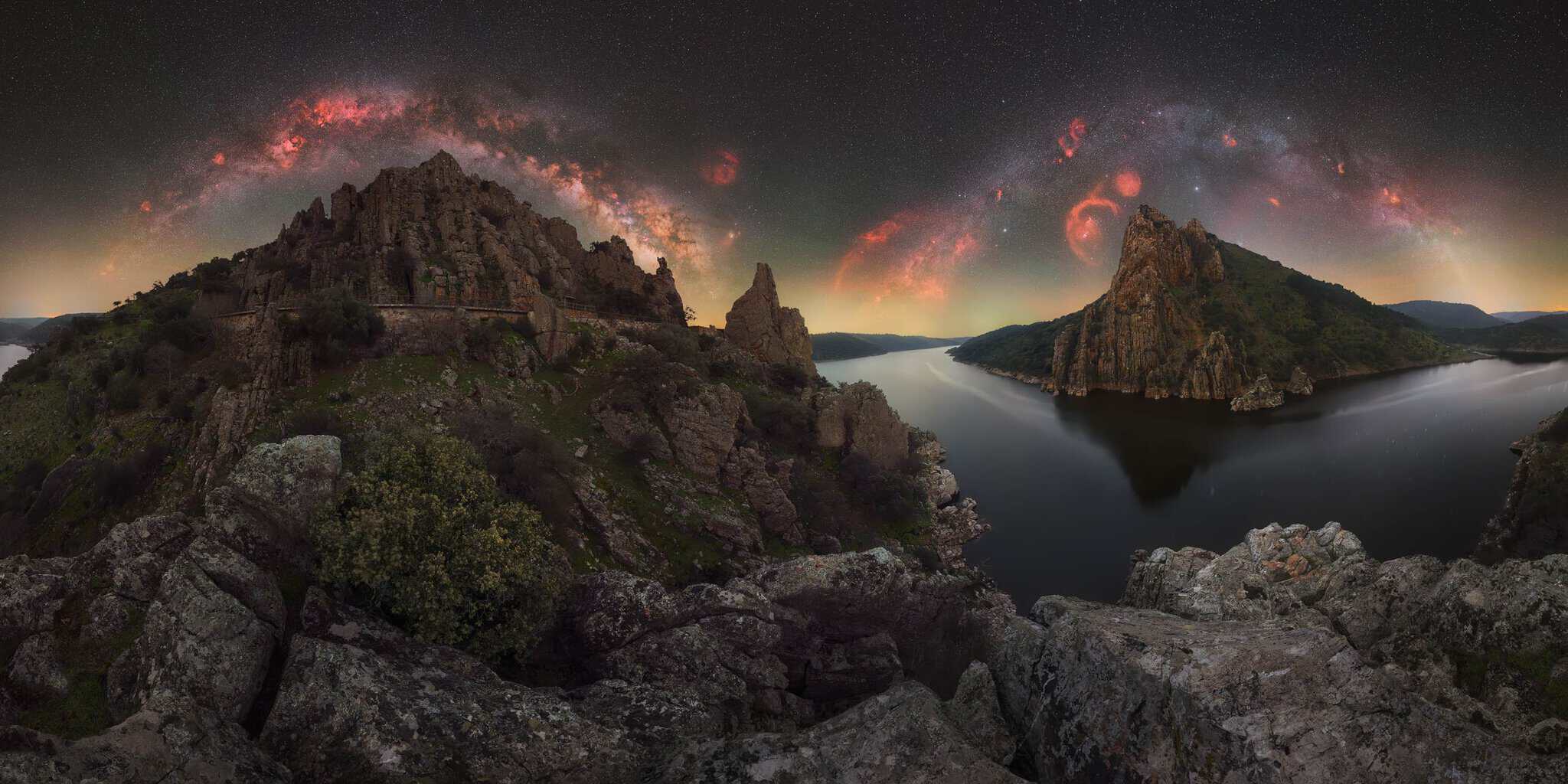
Luis Cajete used both a Nikon Z6II and an astro-modified Nikon Z6 for his “Double Milky Way Over Monfragüe National Park”.
It’s a composite technique that takes advantage of the modified body’s improved hydrogen-alpha sensitivity for the sky, paired with a stock camera for the foreground.
Top Camera Models — All Three Years
Looking across all 75 photos, the Sony A7 III remains the single most-used camera.
But the Nikon Z6 family is close behind — and growing.
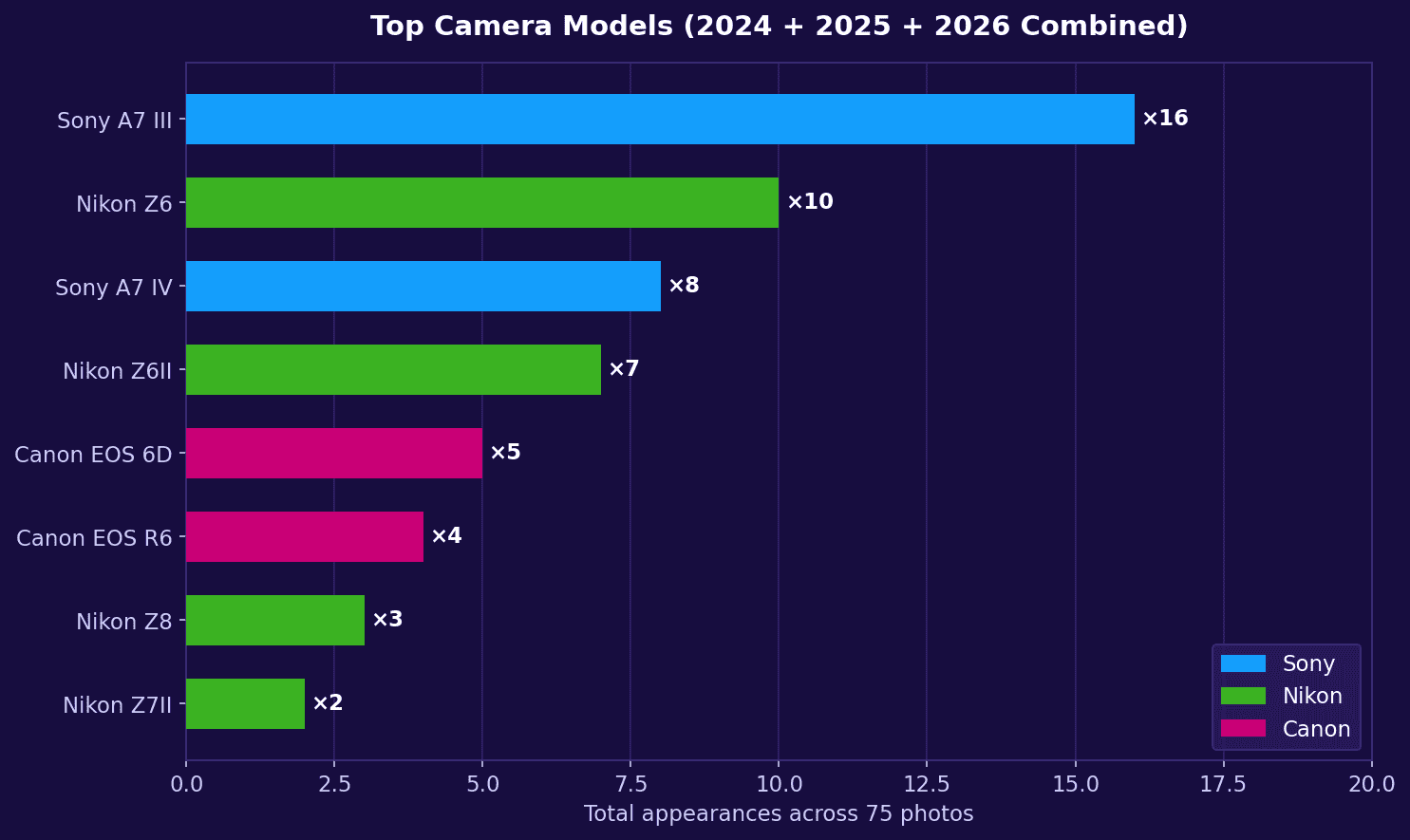
The Canon EOS 6D (an older DSLR, often astro-modified) also makes a strong showing with five appearances across the three years.
It’s a reminder that you don’t need the latest gear to produce competition-winning results.
As always, full-frame sensors remain overwhelmingly dominant as are mirrorless cameras versus aging DSLRs.
Astro Modification
In 2026, 63% of sky-facing cameras were astro-modified — meaning they’d had the built-in UV/IR cut filter replaced to allow more hydrogen-alpha light to reach the sensor.
This makes colours richer and nebulae far more vivid.

Anthony Lopez’s “Celestial Light Over Sea Cliffs” was captured with an astro-modified Nikon Z6II, paired with the TTArtisan 11mm ultra-wide and an MSM Nomad tracker.
Many photographers also use H-Alpha filters on their cameras.
Lenses
A great breakout lens story of 2026 is the Viltrox 16mm f/1.8.
It was used by three photographers — Daniel Viñé Garcia, Alejandra Heis, and Max Terwindt — making it the most-used single lens in the entire 2026 cohort.
It’s significantly cheaper than the Sony or Sigma equivalent, but clearly capable of high level results.
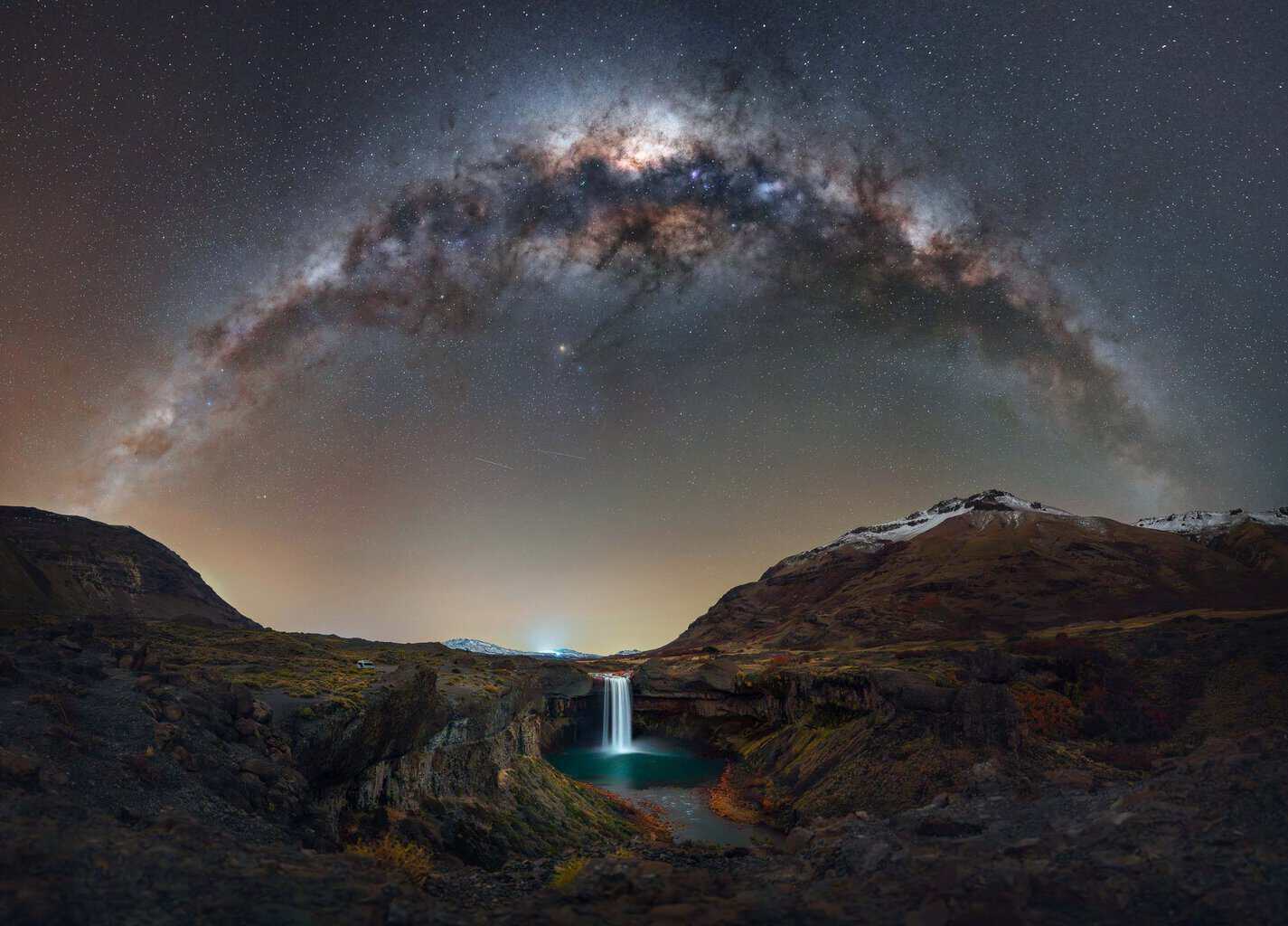
Alejandra Heis shot “Salto del Agrio” using the Viltrox 16mm f/1.8 on a Sony A7 IV — demonstrating that this lens can deliver exceptional results on a top-tier body.
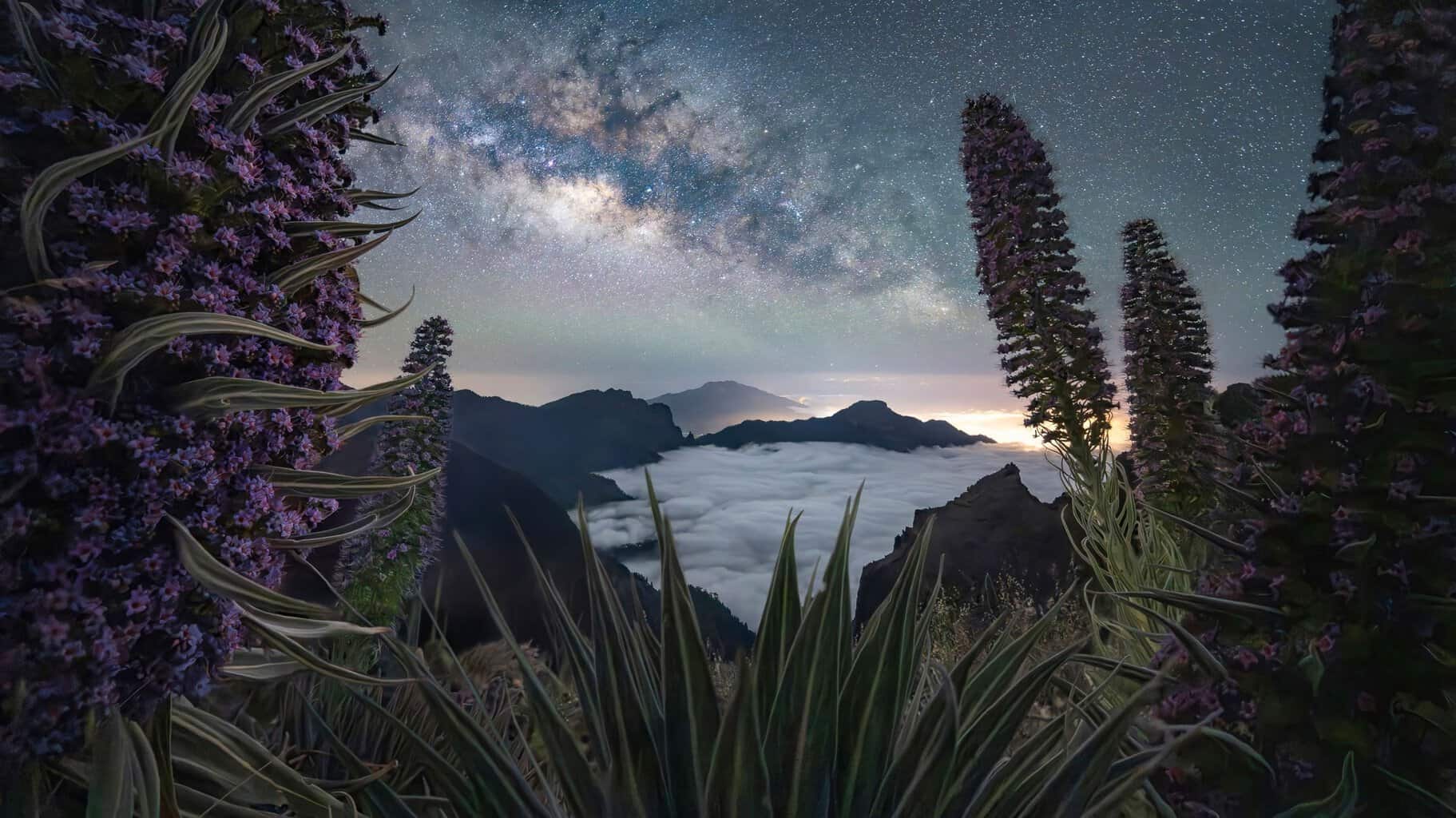
Max Terwindt’s “Caldera Galaxy Panorama” was also captured with the Viltrox 16mm f/1.8, this time on a Nikon Z7 II — showing the lens works across different mounts.
Lens Brand Distribution 2026
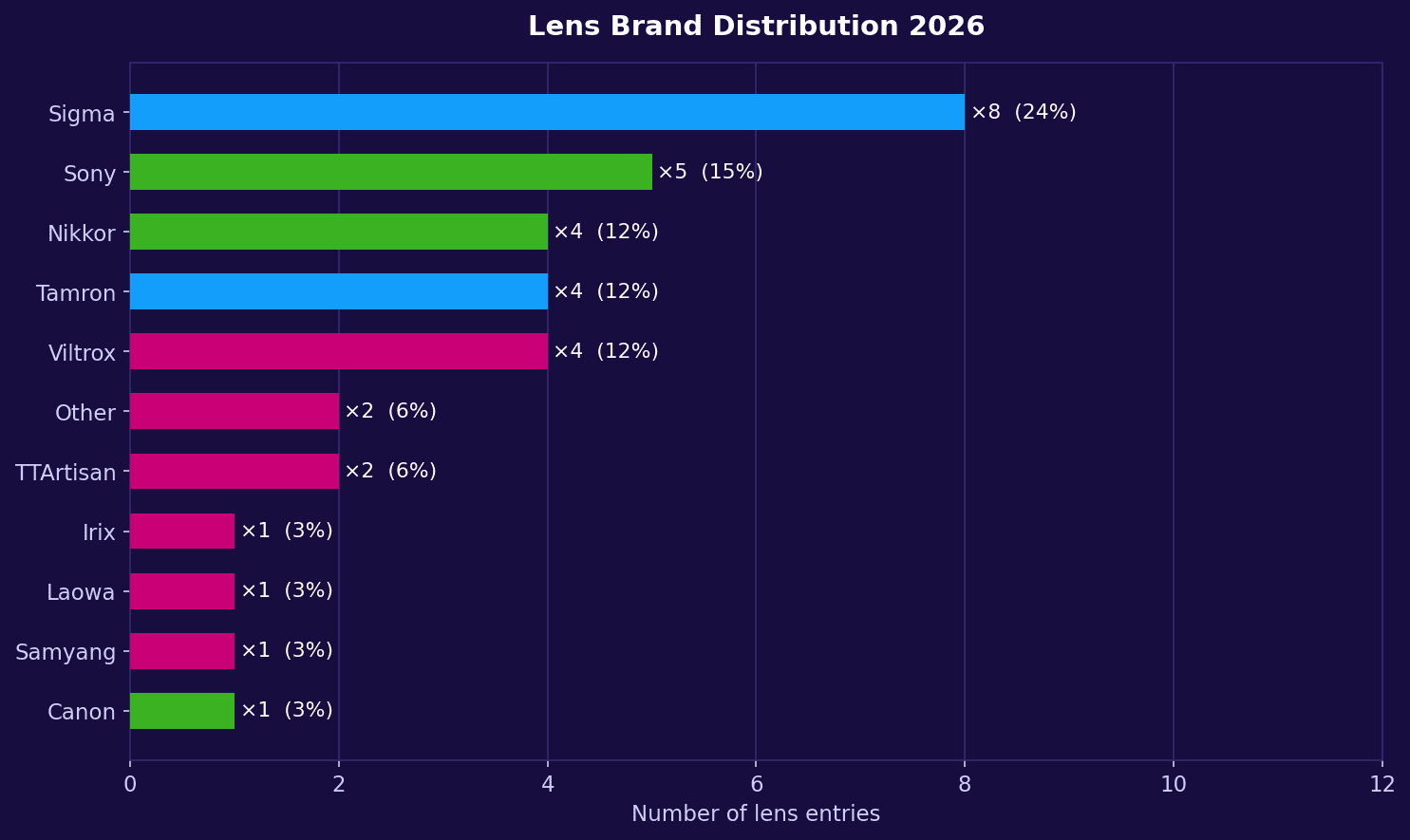
Sigma remains the most common lens brand with 24% of entries.
But the 2026 distribution is much more spread across brands than previous years.
Viltrox and Tamron both appear at 12%, and we even see Yongnuo and Irix make an appearance.
Top Lenses Across All Three Years
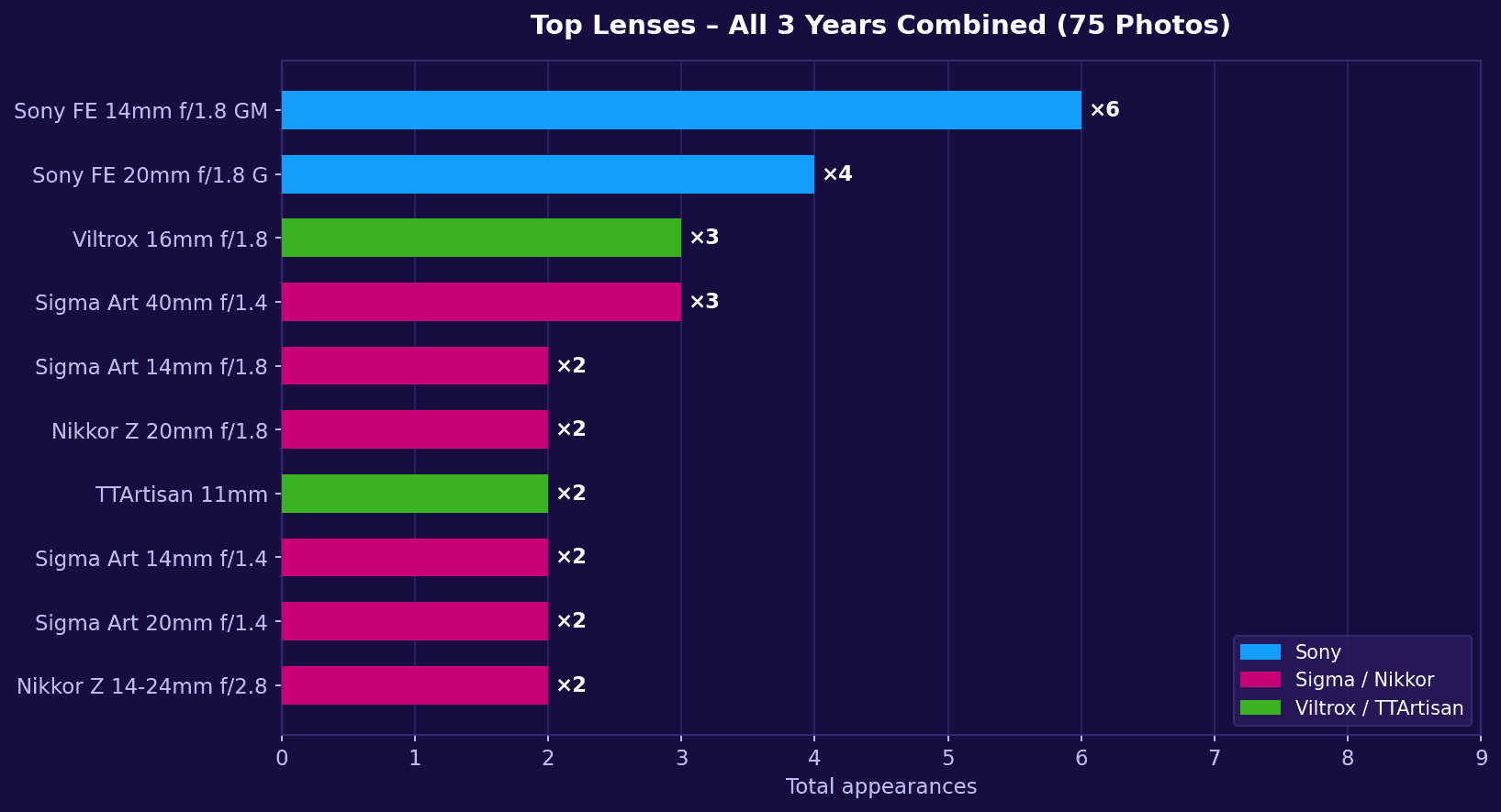
Looking at all 75 photos, the Sony FE 14mm f/1.8 GM tops the combined list.
The Viltrox 16mm f/1.8 is right up there and other strong performers include:
Focal Length Trends
The preferred lens focal length seems to be trending wider:
- The average dropped from 24mm in 2024 to 21mm in 2025 to just over 20mm in 2026.
- In all three years, the 13–16mm range is the single most popular bucket (38% in both 2025 and 2026).
Wider lenses capture more sky, tolerate longer exposures without star trails, and are increasingly available at accessible price points.
Star Trackers
Tracker Adoption Keeps Rising
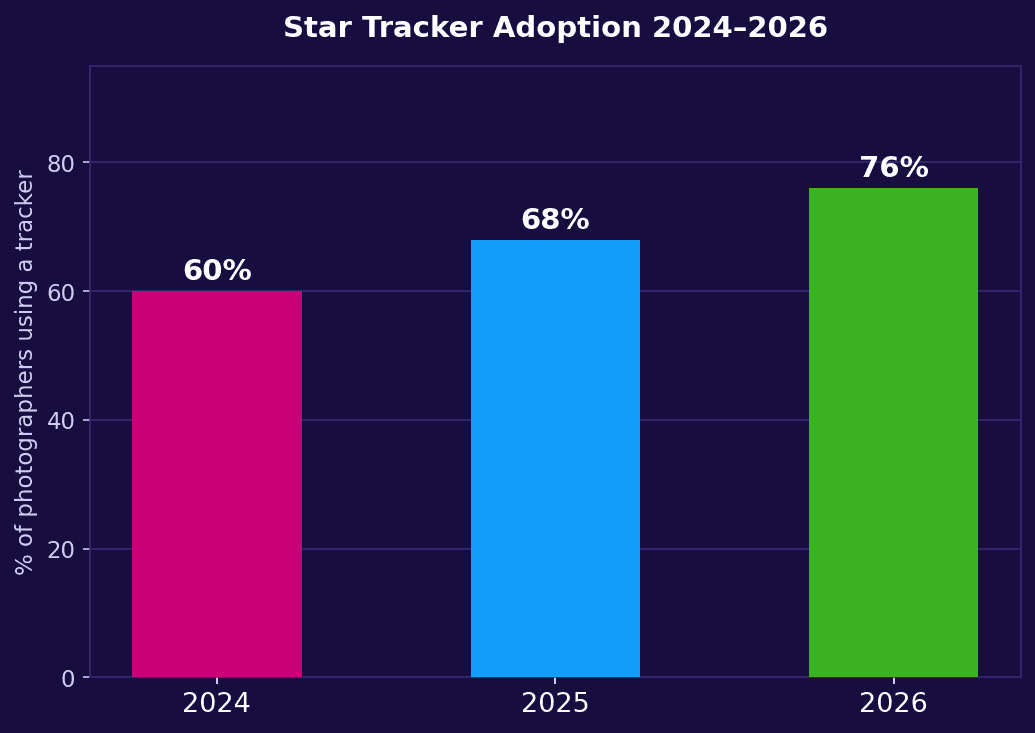
76% of 2026 photographers used a star tracker — up from 68% in 2025 and 60% in 2024.
Brand Share: Sky-Watcher Leads, MSM Nomad Surges
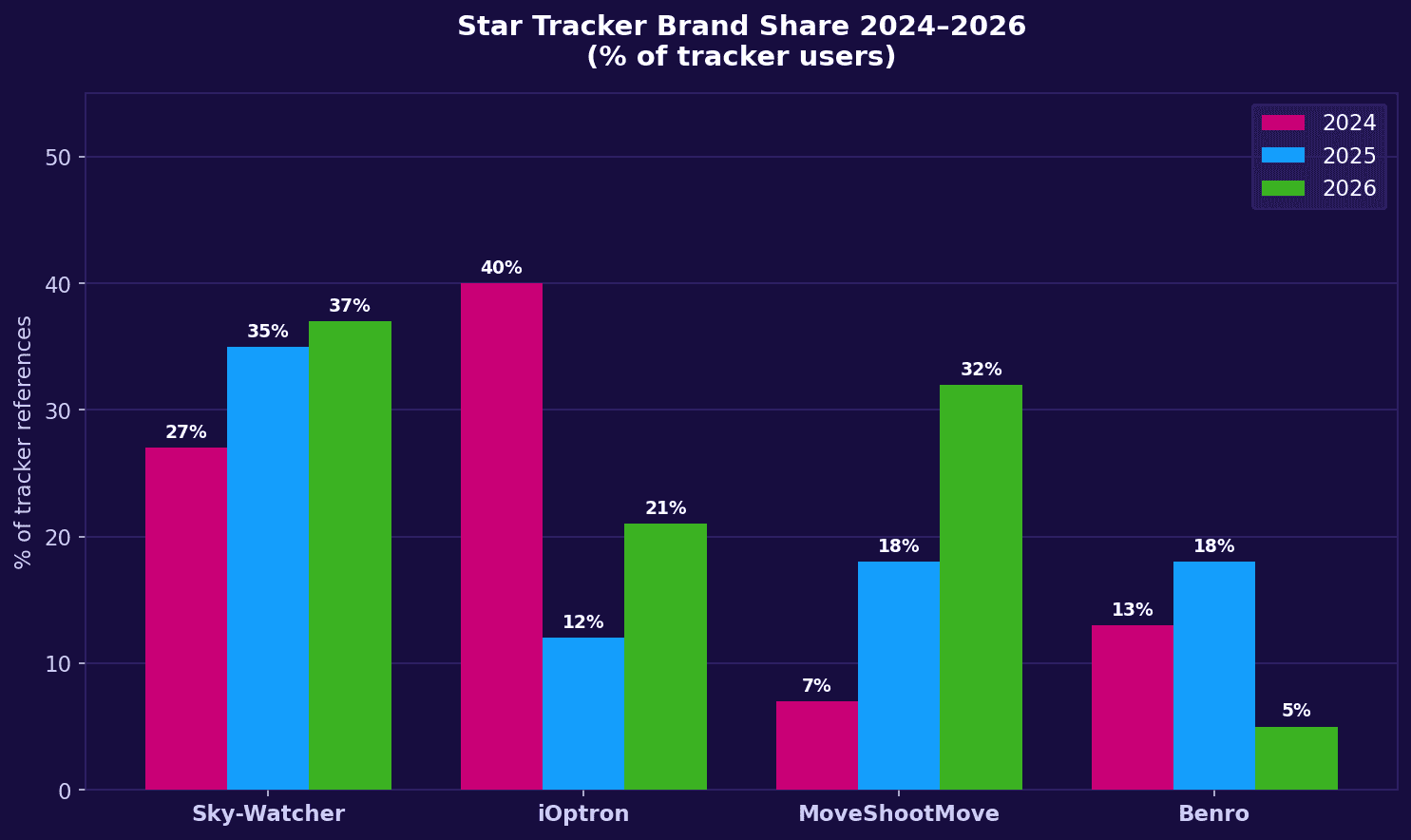
Sky-Watcher continues to lead overall with 37% of tracker entries in 2026.
But the biggest mover is MoveShootMove, which jumped from 7% in 2024 to 18% in 2025 to 32% in 2026 — appearing six times among this year’s 25 winners.
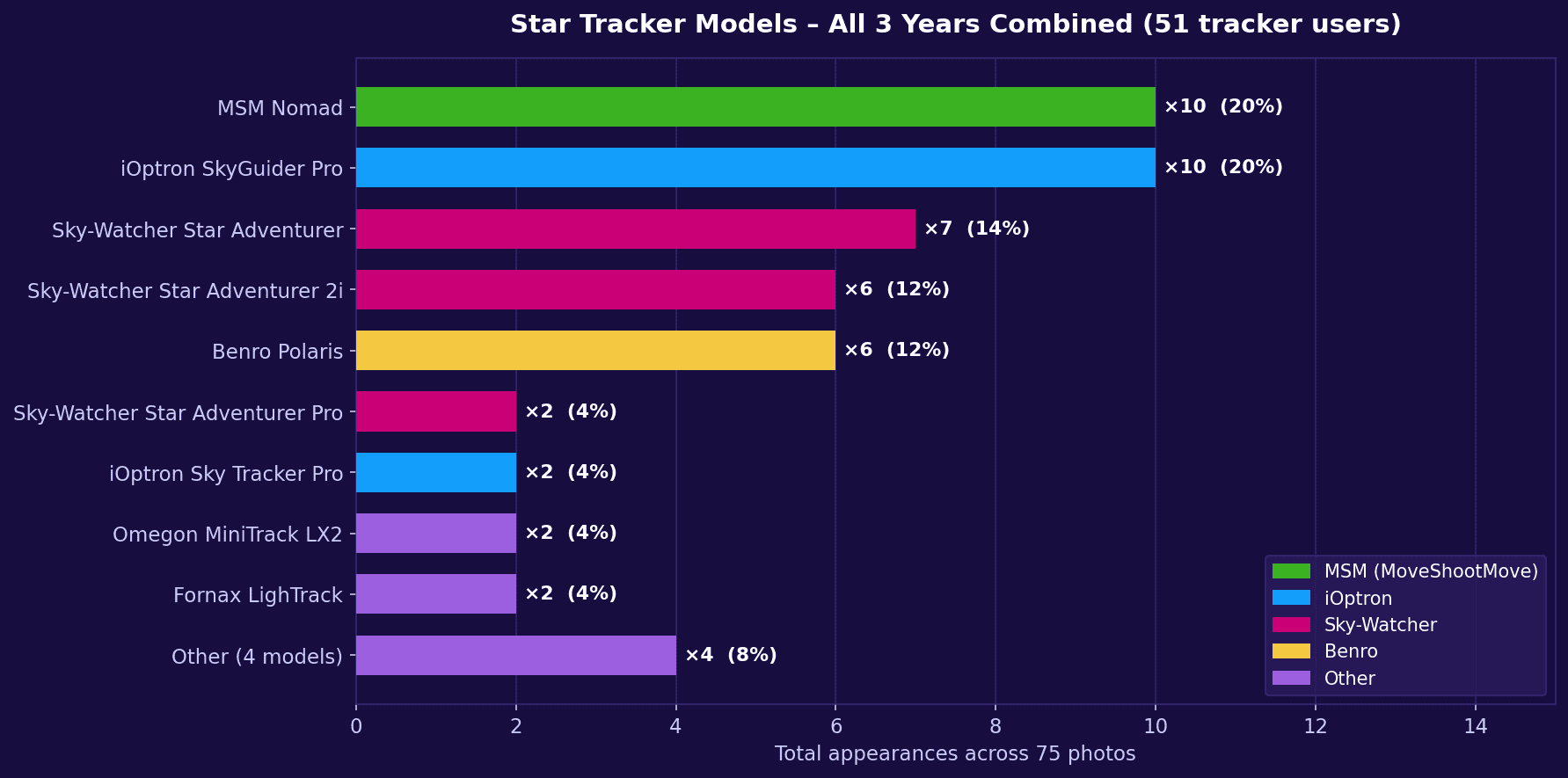
Breaking that down by specific model, the MSM Nomad and iOptron SkyGuider Pro are tied as the most-used trackers across the full dataset — each appearing 10 times across 75 winning photos.
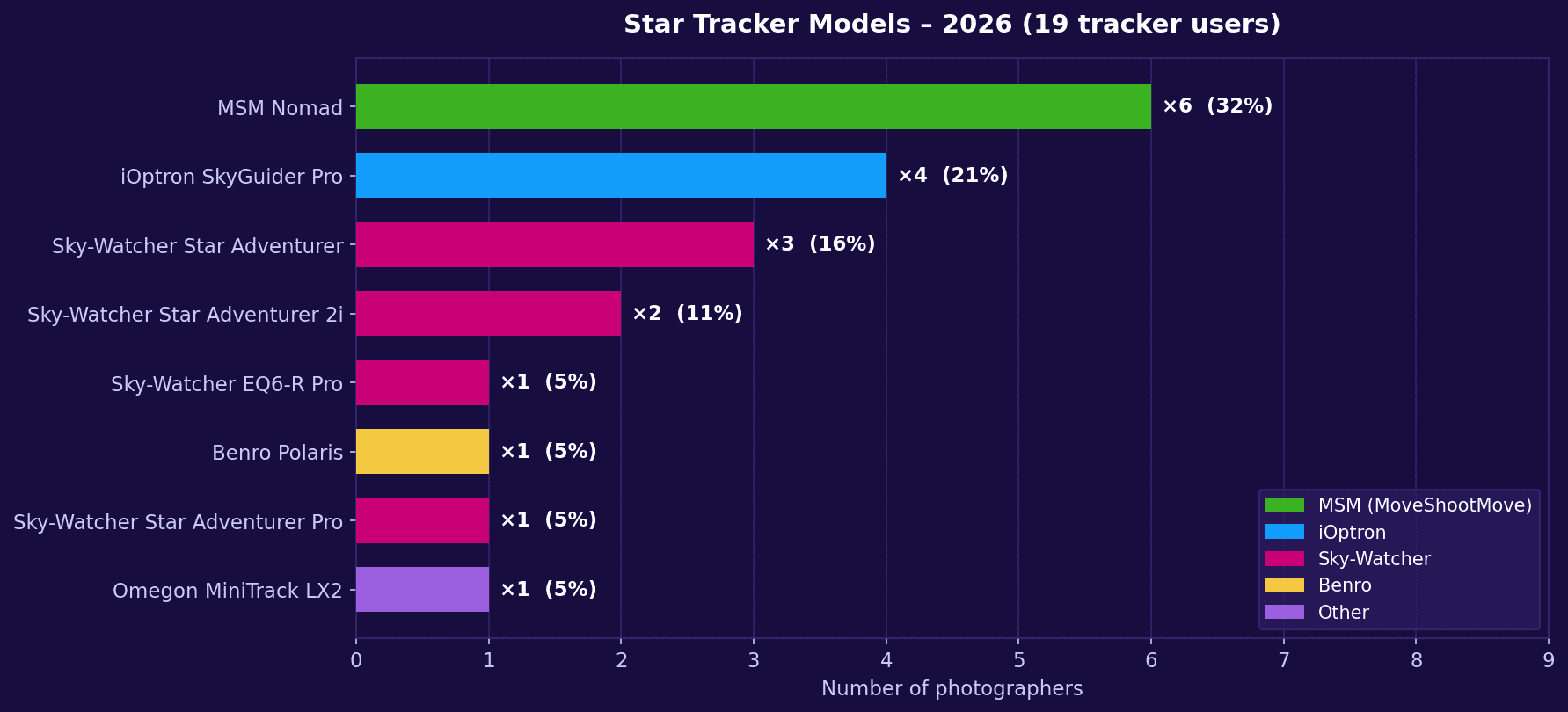
In 2026 specifically, the MSM Nomad was the standout — used by 6 of the 19 photographers who used a tracker (32%), with the iOptron SkyGuider Pro second at 4.
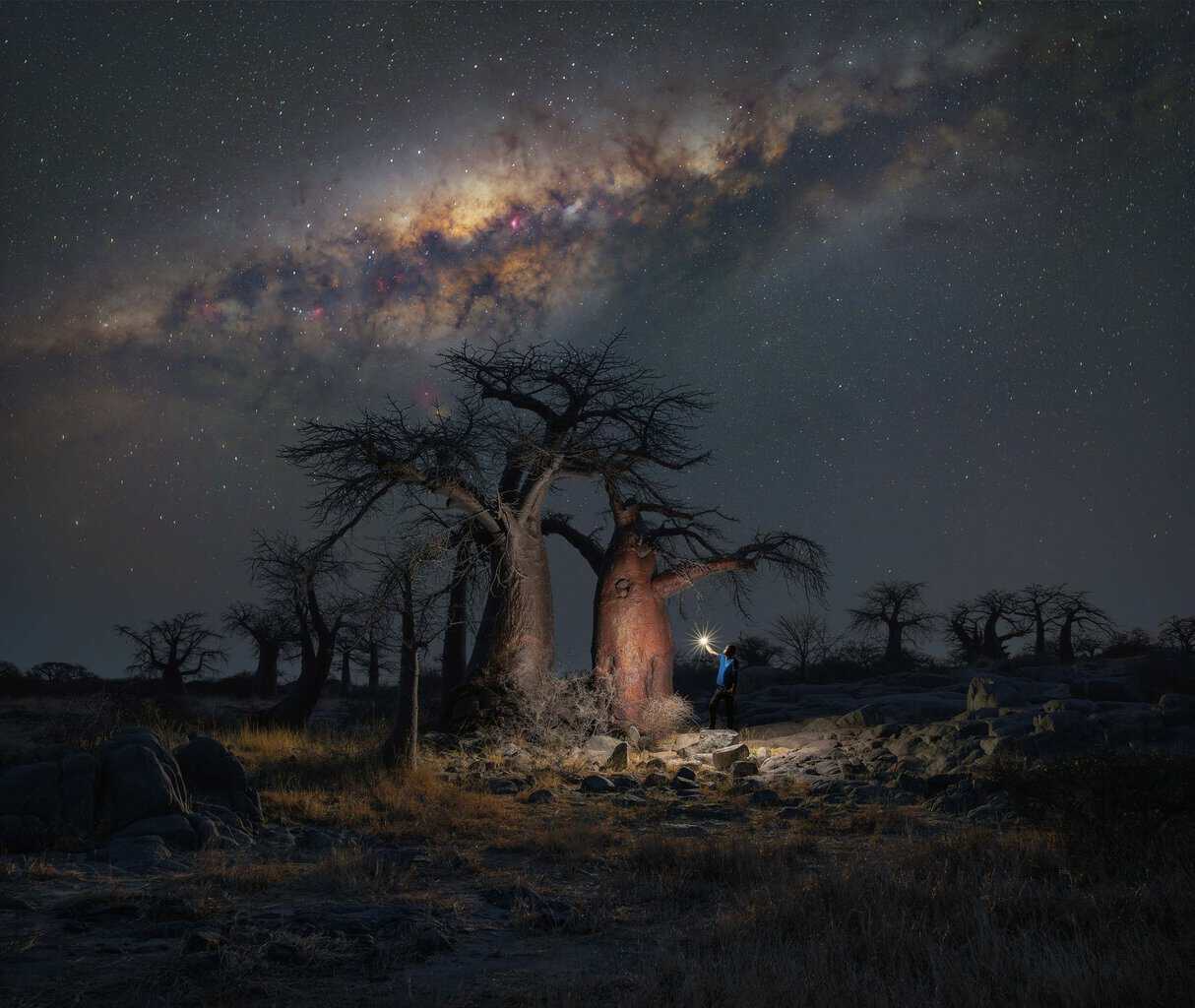
Stefano Pellegrini’s “Botswana Baobabs by Night” was captured using the MSM Nomad tracker on a Nikon D850.
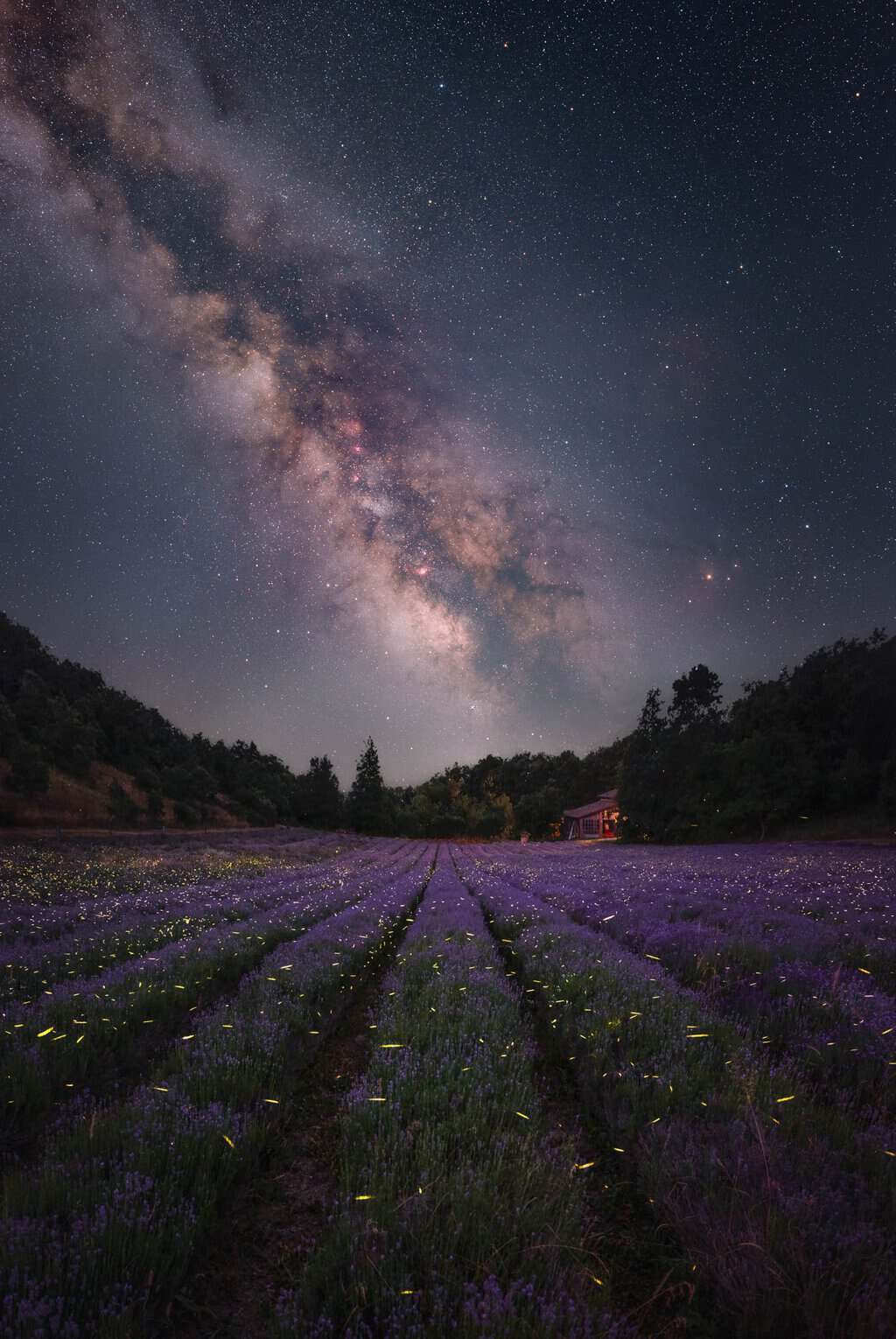
Luca Fornaciari used an MSM Nomad alongside a Sony A7 III (astro-modified) and Sony 14-24mm f/2.8 GM for “Il Giardino delle Stelle”.
The iOptron SkyGuider Pro, which dominated in 2024 (40%), has settled back to 21% in 2026 — it’s still widely used, but no longer the runaway favourite it once was.
Tripods
No single tripod brand dominates — the 2026 winners used everything from Benro and Innorel to Peak Design and 3 Legged Thing.
However, 100% are using carbon fiber tripods.
These cost a little more than aluminium models but offer greater stability and lower weight to carry.
Benro was the most represented brand with three appearances, followed by Innorel and Sirui with two each.
Budget Picks Worth Noting
One of the most valuable takeaways from this analysis is that world-class astrophotography doesn’t require the most expensive gear.
A few standout value options from the 2026 results:
- Viltrox 16mm f/1.8 — the most-used single lens in 2026, used by three photographers on different camera systems.
- TTArtisan 11mm f/2.8 (~$130) — used by two photographers in 2026, including Anthony Lopez’s dramatic “Celestial Light Over Sea Cliffs”.
- MSM Nomad tracker — the fastest-growing tracker, used by six photographers in 2026.
- Canon EOS 6D (used/astro-modified) — an older DSLR that keeps appearing year after year, especially in astro-modified form at bargain second-hand prices.
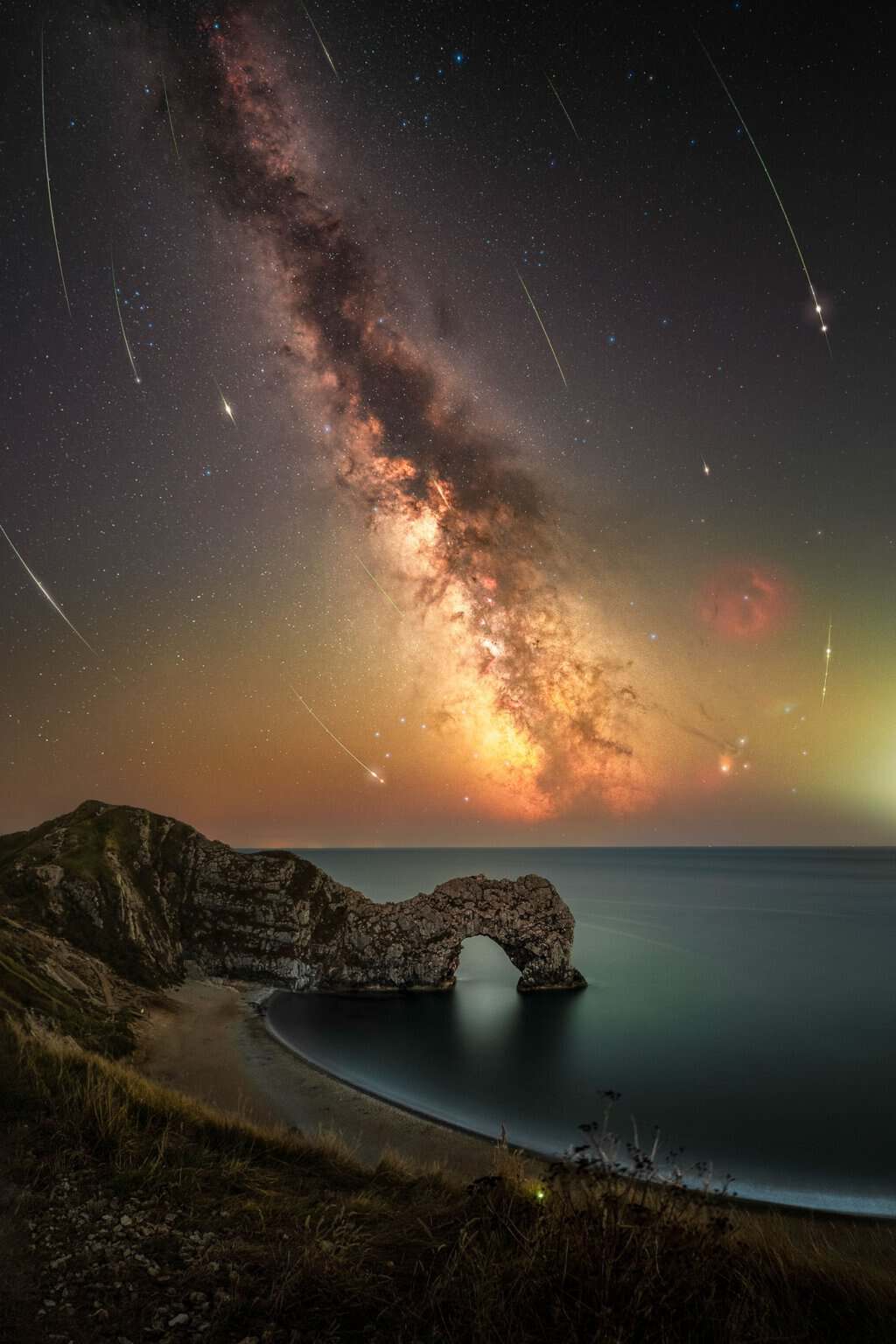
Milky Way Photographer of the Year 2026: Full Gallery
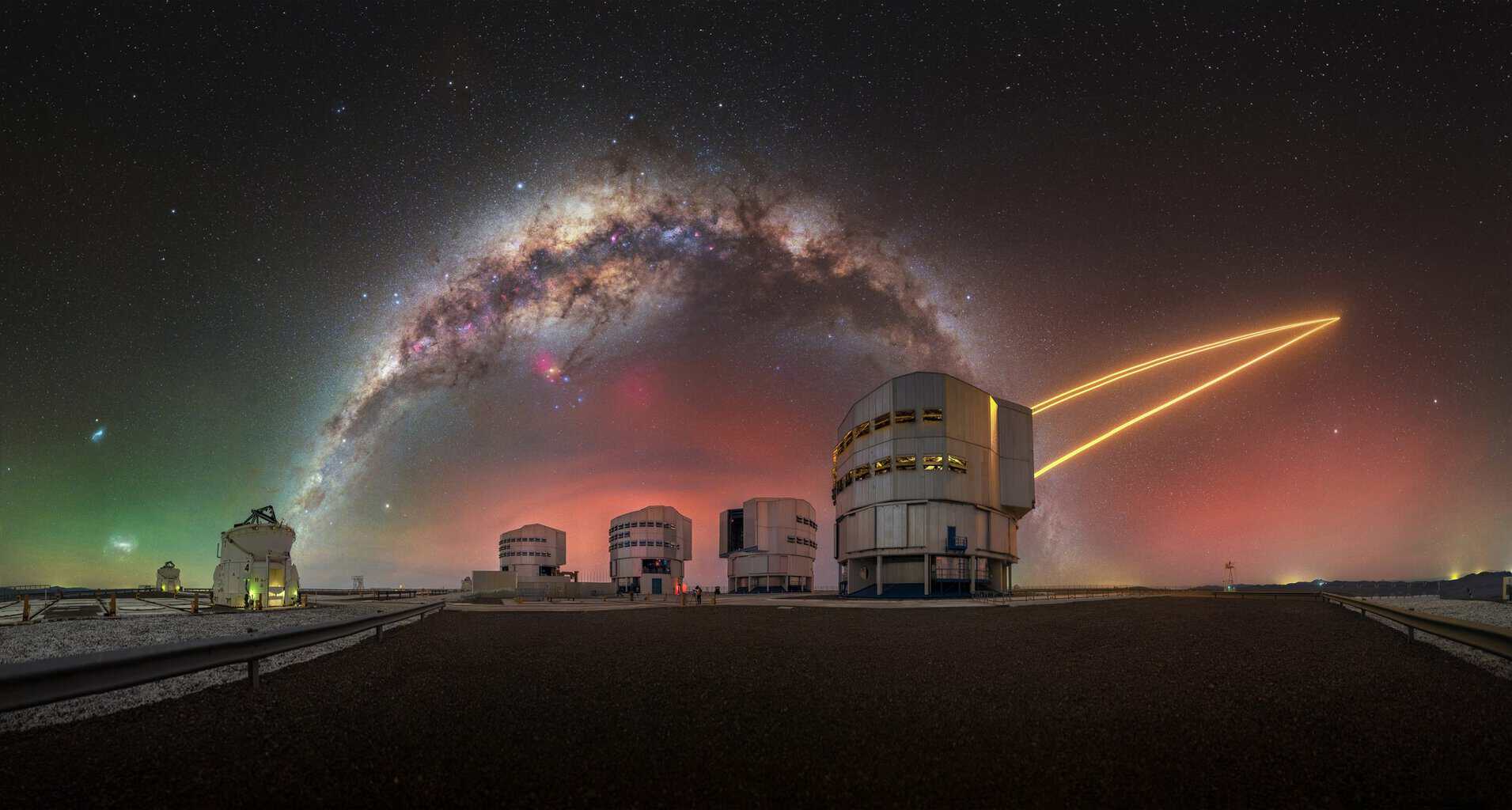
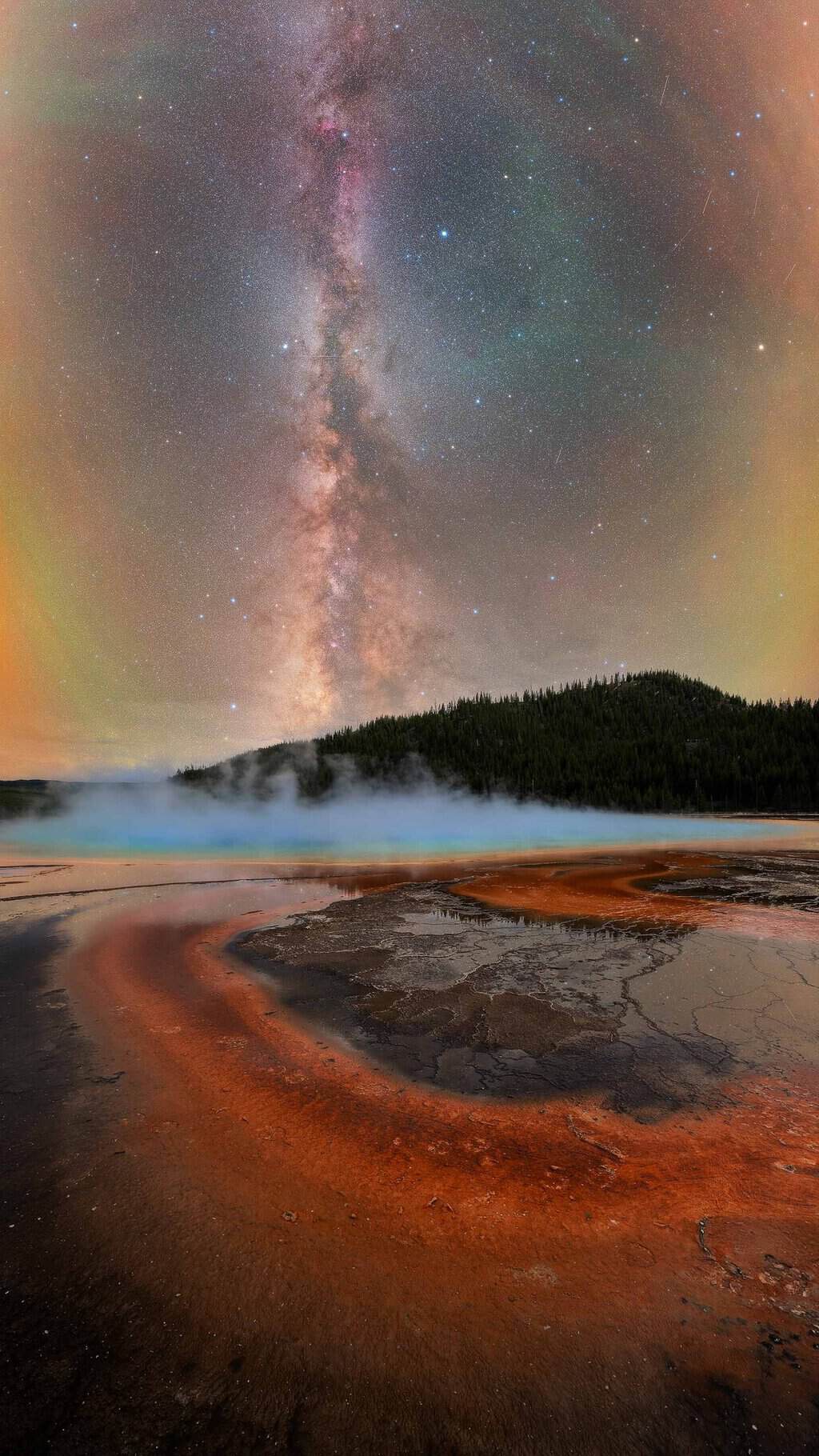
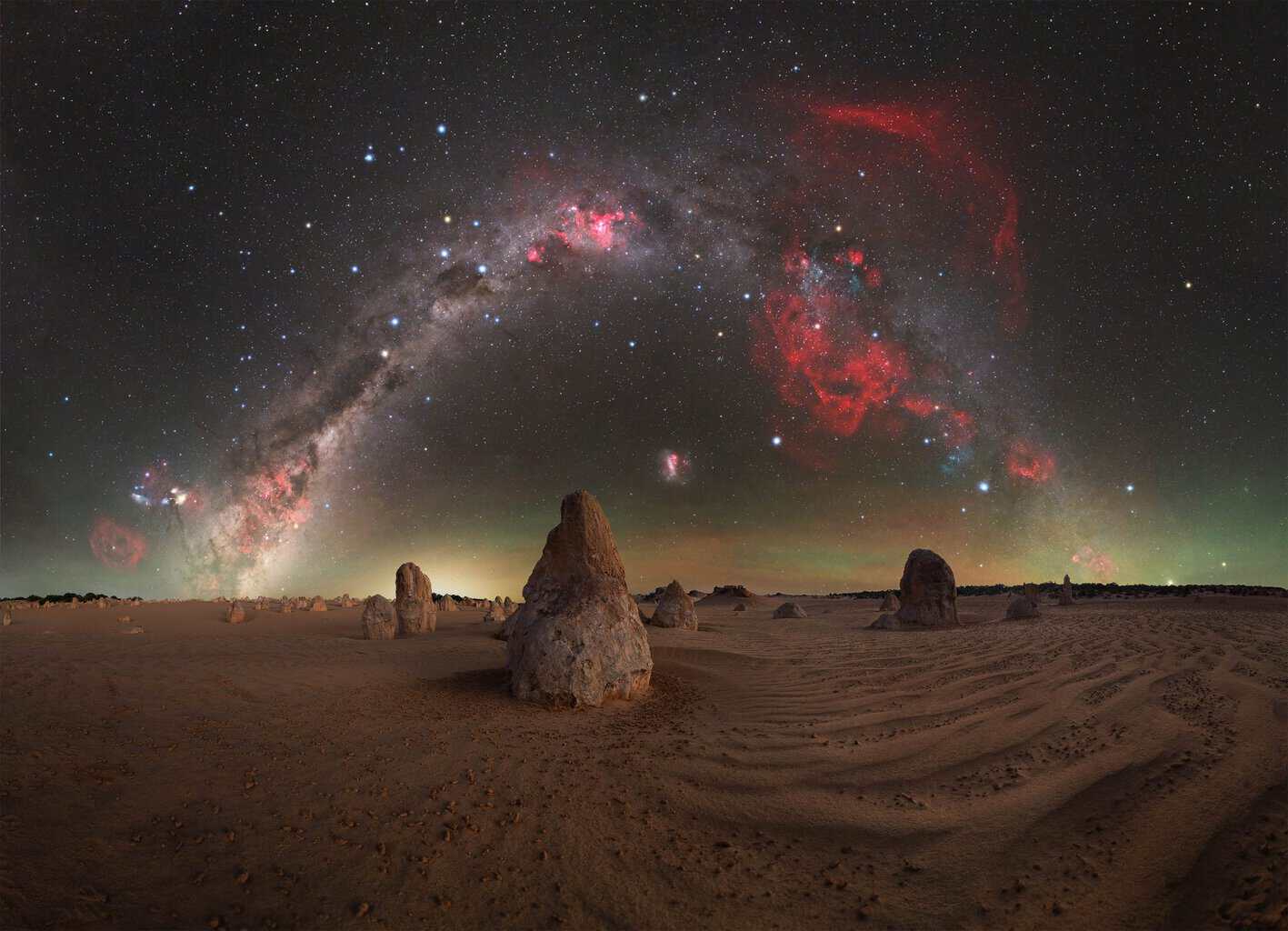
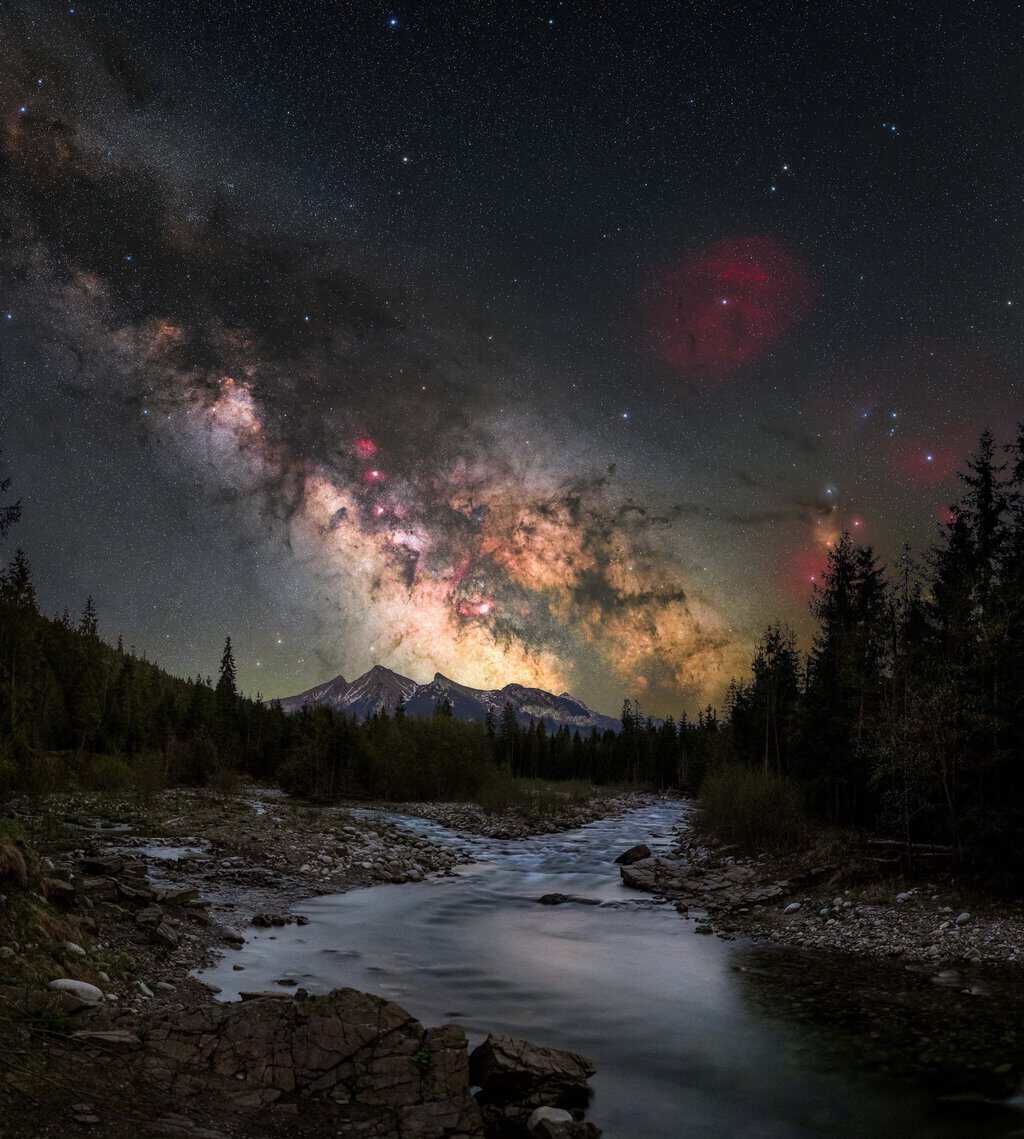
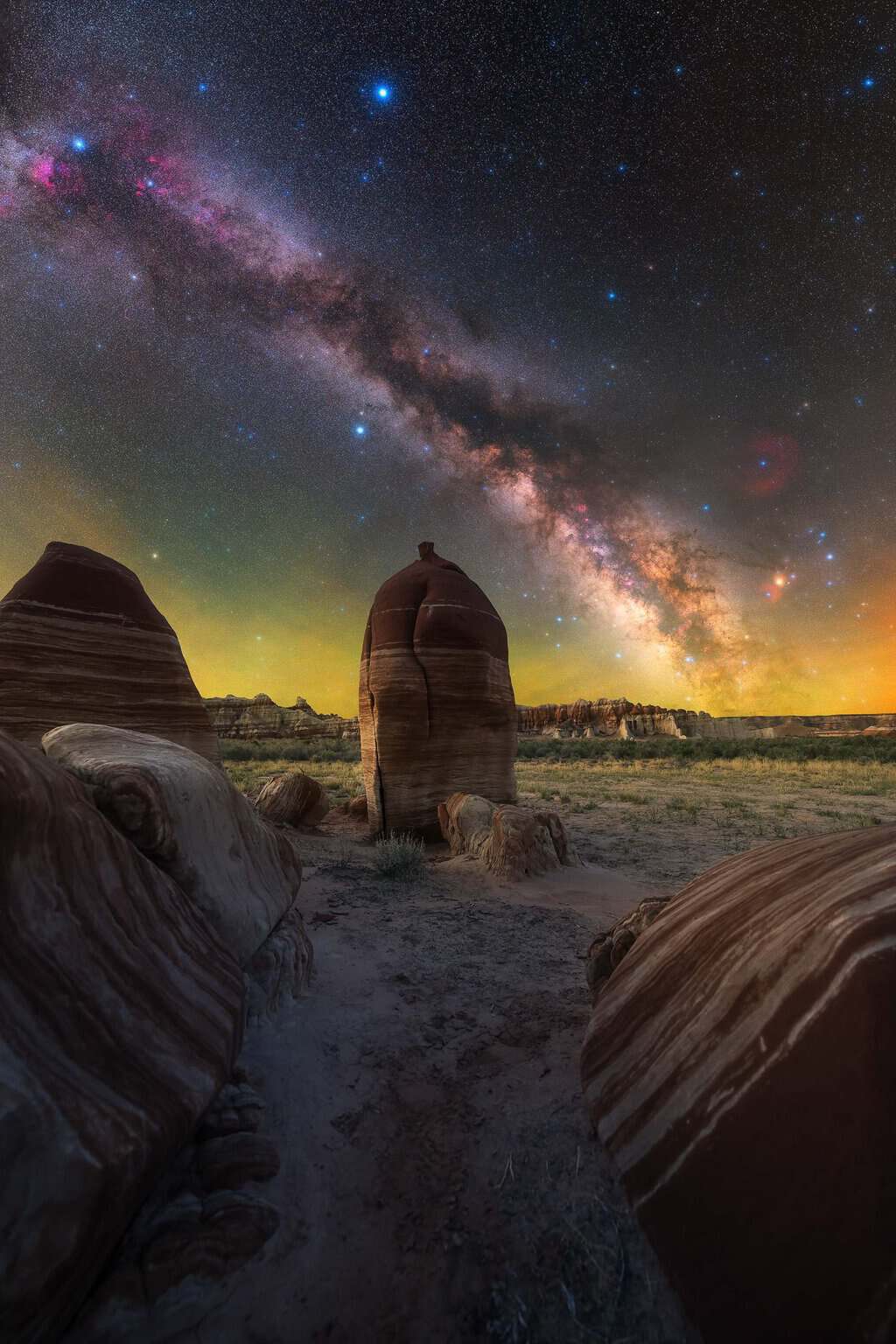
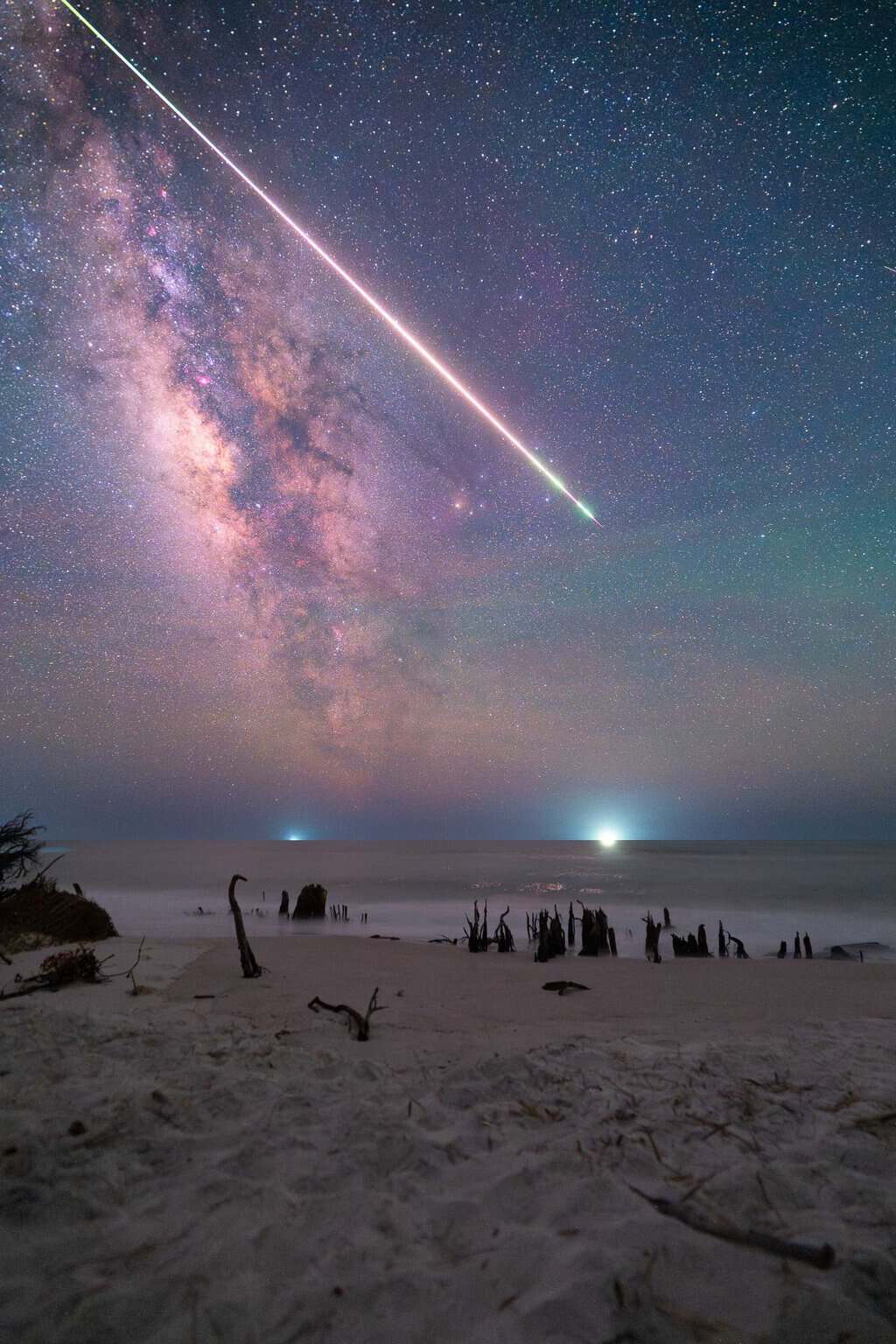
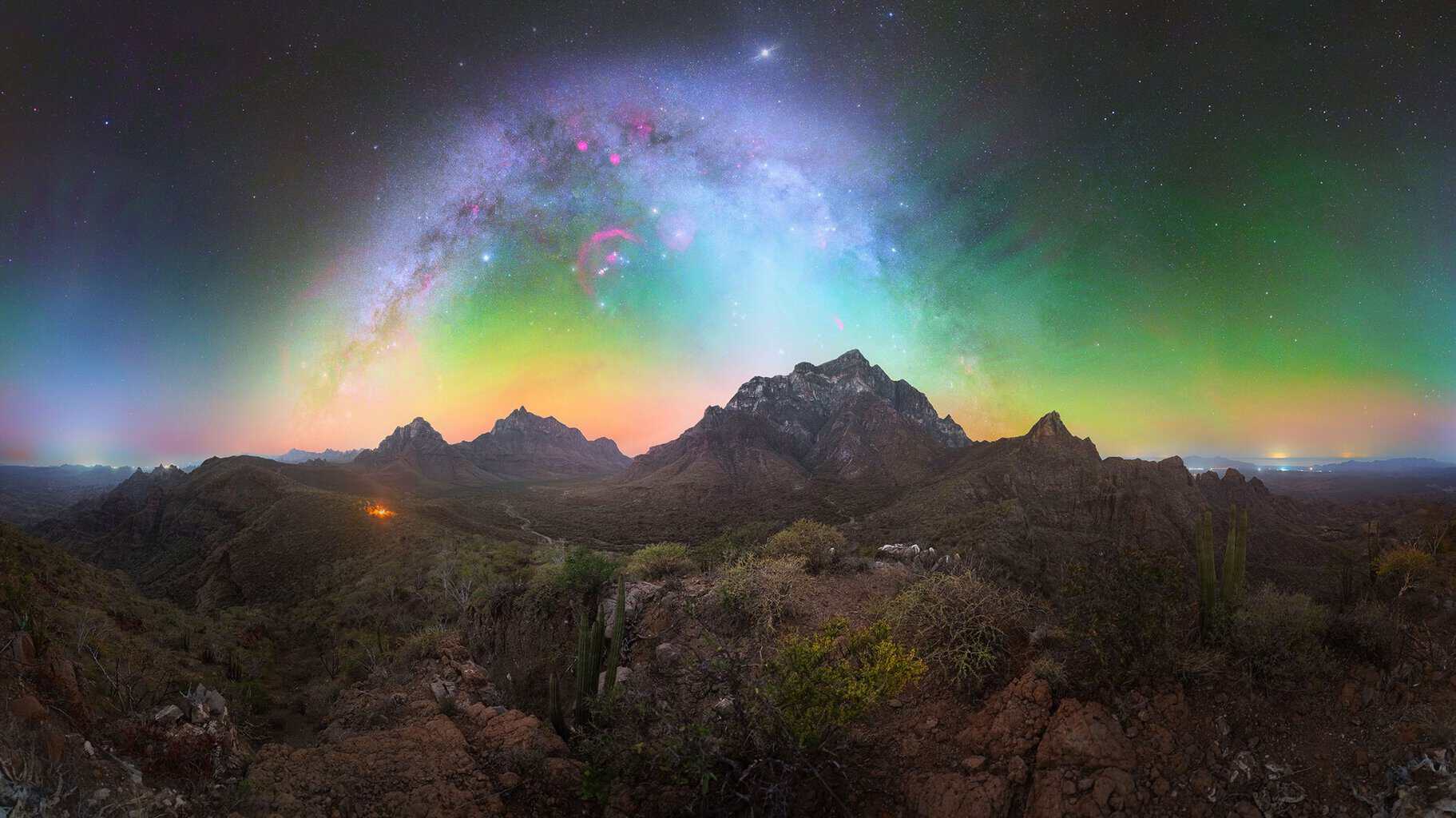
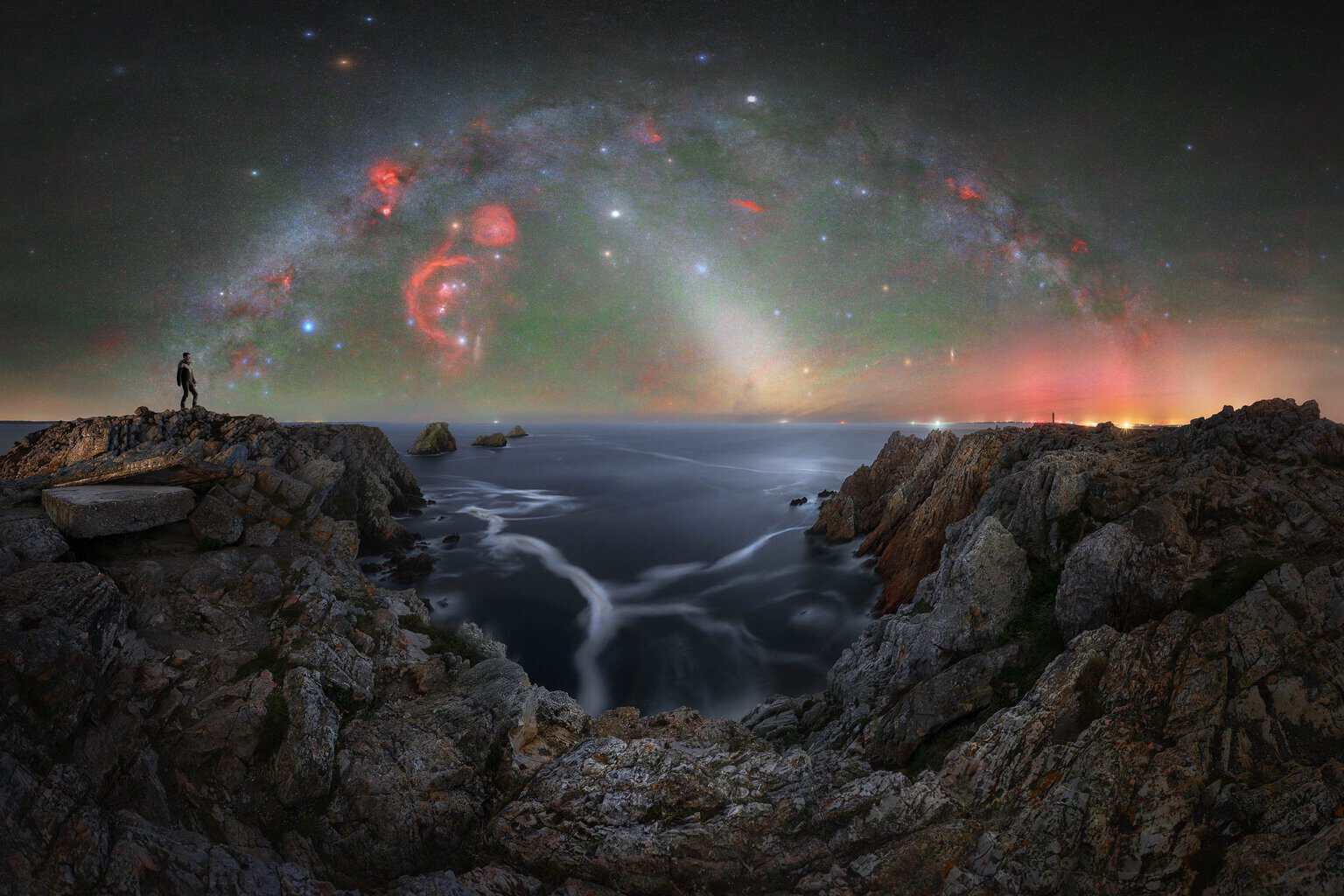
Here are the remaining 2026 Milky Way Photographer of the Year selections:


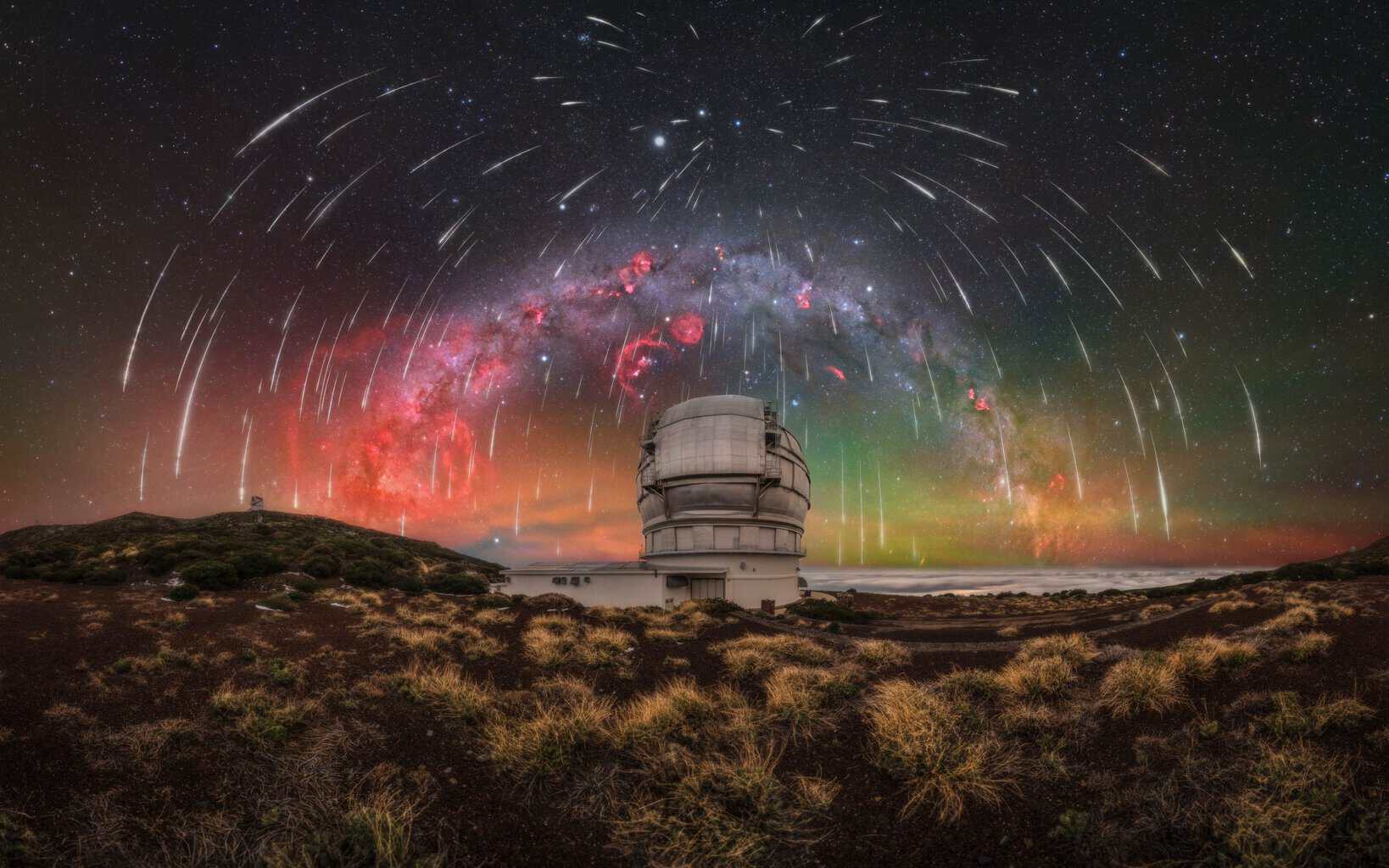





Huge credit to Capture the Atlas for curating this competition each year and publishing the gear lists — it makes analysis like this possible.
And of course to all 25 photographers whose incredible work inspires the astrophotography community worldwide.
You can also read our gear breakdowns from 2024 and 2025 for comparison.
All 25 competition photos are © their respective photographers and used here for editorial reference only.