The release of the Dwarf Mini from Dwarflab has created a direct, low-cost competition for the popular ZWO Seestar S30.
Both models are exceptional, budget-friendly options, but key differences in their accessories and software will determine which one fits your personal astrophotography style.
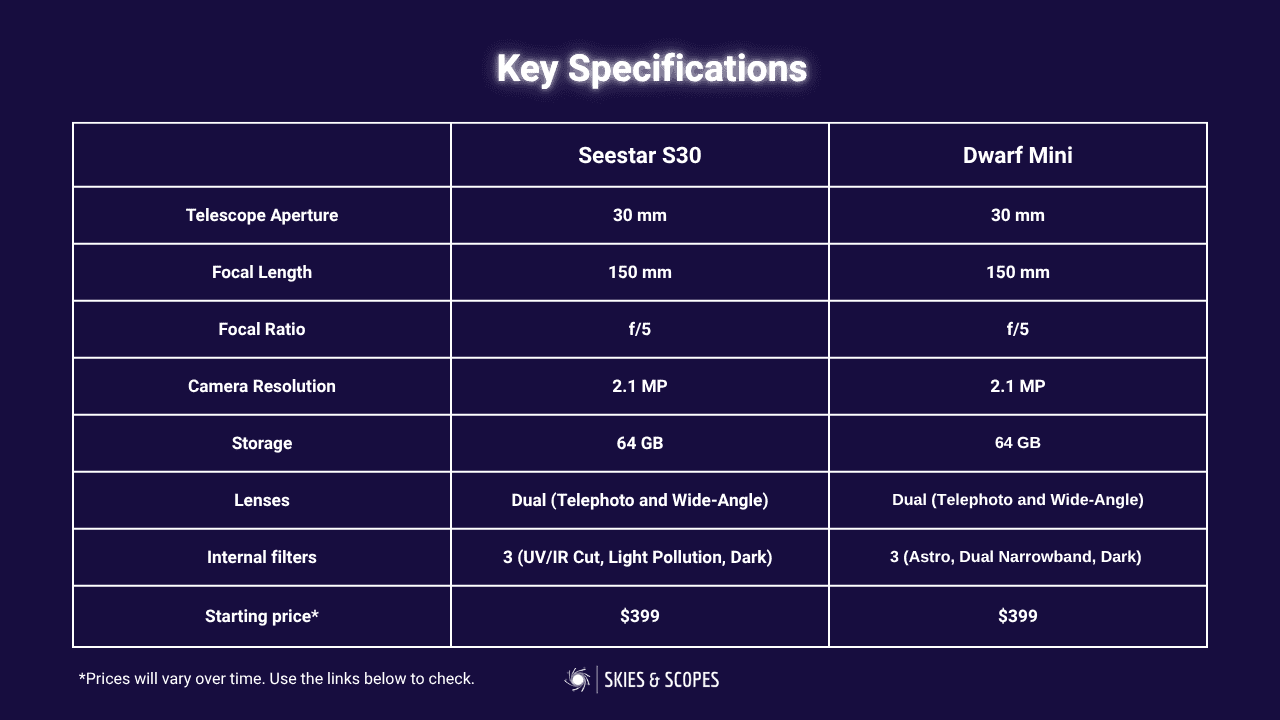
At their core, the two devices share nearly identical specifications:
- Aperture: 30mm
- Camera Resolution: 2.1 megapixels
- Sensor: Sony IMX 662
- Storage: 64GB Built-in
- Lens System: Both feature dual lenses.
The choice ultimately comes down to portability, price, and user interface.
Price & Weight: The Tripod Trade-Off
Both the Dwarf Mini and the Seestar S30 launch at the same starting price of $399.
However, this is where the differences in their package contents are revealed:
| Feature | Dwarf Mini | ZWO Seestar S30 | Difference |
| Starting Price | $399 | $399 | Identical |
| Included Tripod? | No (Must buy separately) | Yes (Tabletop/Basic) | S30 includes tripod, Dwarf Mini does not. |
| Unit Weight (Body only) | 0.85 kg | 1.65 kg | Dwarf Mini is lighter (but S30 weight includes tripod). |
| Weight with Tripod | 1.64 kg (0.85 kg + 0.79 kg tripod) | 1.65 kg | Essentially the same total weight once accessories are added. |
| Included Accessories | Solar filter, basic accessories | Solar filter, basic accessories, carry case | S30 offers a more complete ready-to-use package. |
Equatorial (EQ) Mode: The Performance Edge
For serious astrophotography, using the telescope in EQ (Equatorial) mode is essential.
This aligns the telescope with the Earth’s rotational axis, allowing for longer exposures, sharper stars, and better overall images by compensating for field rotation.
- Dwarf Mini: The standard Dwarf Mini tripod accessory ($89) is a hydraulic/fluid head that is sturdy enough to allow for EQ mode operation.
- Seestar S30: The standard tripod included with the S30 does not allow for EQ mode. You would need to purchase the ZWO fluid head or a third-party photography tripod/head separately to utilize this feature.
The takeaway: Both telescopes have the capacity for EQ mode, but the Dwarf Mini offers a more robust, EQ-ready tripod upgrade path.
App & Software: Beginner vs. Hobbyist
The software experience is the biggest differentiator, but both Dwarflab and ZWO are constantly improving their apps.
| Feature | ZWO Seestar S30 App | Dwarf Mini App |
| Ease of Use | Simpler, easier for beginners. Highly automated, simple interface. | More complex, offers more manual control for hobbyists. |
| Control Level | Less control over individual exposure/gain settings. | Allows experimentation with different parameters and settings. |
| Straight-Out Image | Generally produces the best, most automated photo straight to your phone. | Requires a little more tinkering, but allows the user to push imaging limits. |
| Default Image Format | Portrait mode. | Landscape mode. |
The takeaway:
- Beginners: The Seestar S30 is better for quick, automatic results with minimal effort.
- Hobbyists: The Dwarf Mini is better for users who want manual control and to experiment with parameters to maximize image quality.
Conclusion: SeeStar S30 vs Dwarf Mini
Both are the best low-cost, high-quality smart telescopes on the market, but your preference for simplicity or control should guide your choice:
- Choose the ZWO Seestar S30 if: You are a beginner who wants the easiest, most automated experience and a slightly more complete package straight out of the box (with the included tripod and carry case).
- Choose the Dwarf Mini if: You are a hobbyist who wants more manual control over camera settings and prefers a slightly more robust, EQ-ready tripod upgrade option.
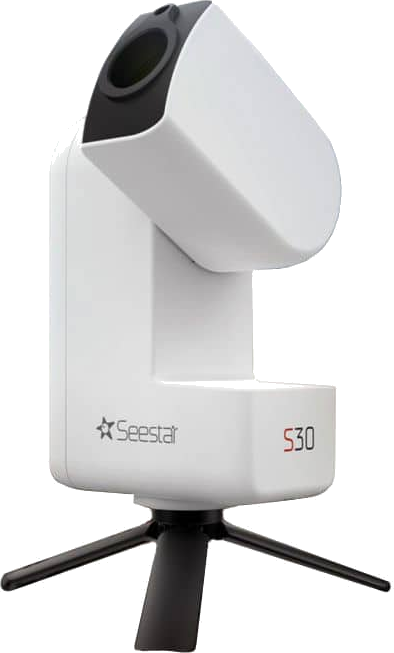
Budget Portable Smart Telescope
- Extremely small, light and portable
- 30mm aperture and 150mm focal length
- ZWO has a track record of delivering high-performing astrophotography gear
- Relatively small size & weight also means relatively low telescope specs
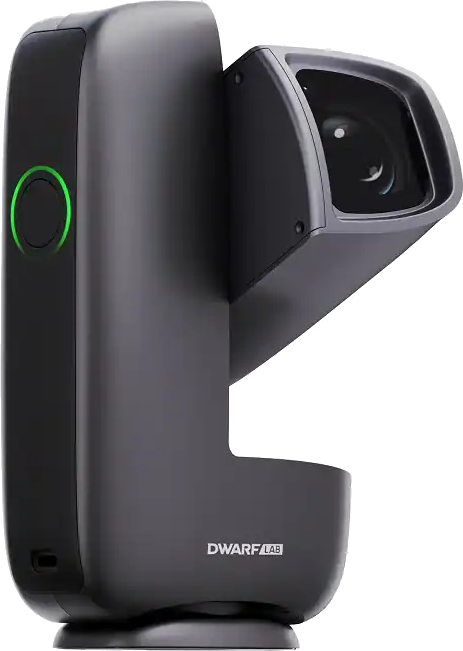
The latest smart telescope from Dwarflab
- Super light
- Very affordable
- Great imaging capacity
- Need to add a tripod (or use one you already own)
See here for an overall review of the best smart telescopes.