In this case study, learn how a series of stunning nightscapes in the Austrian Alps were captured by Mario Oberlaber.
Astrophotography in the mountains is always unpredictable. Weather conditions, wind, haze, or clouds often force quick decisions and improvisation. But when everything comes together — a clear sky, the Milky Way above the mountains, and the quiet atmosphere of the alpine night — it creates moments that make the entire effort worthwhile.
Astrophotography in the Alps is always a combination of careful planning and spontaneous creativity.
Many of my nightscape images begin long before the actual night of shooting.
At home I often use tools such as PhotoPills and the Sky Guide app to study how the sky will move above a location during the night.
This helps me understand where the Milky Way will rise, how constellations like Orion will appear, and whether the composition I imagine might work.
However, some of my favorite images are not planned in detail. Often the final composition only appears once I arrive at the location and explore the landscape during daylight.
Walking around the area and observing how the terrain interacts with the sky often inspires new ideas.
One example of this approach is my panorama “Autumn Arch.”:
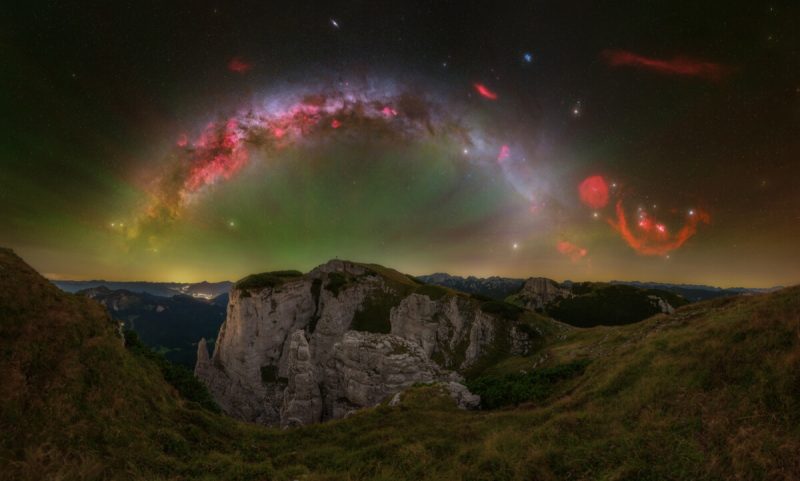
The image was captured near the summit area of the Loser in the Austrian Alps during the night of August 1st, 2025.
What makes this panorama special is that it combines both the summer and winter sky in one image.
On the left side the Summer Triangle and Cygnus are visible, while on the right side Orion and the Pleiades are already rising. The zodiacal light creates a soft glow along the horizon.
The panorama covers roughly 200 degrees of the sky and was captured in two rows for the sky and an additional row for the foreground.
Because of strong winds that night, the sky consists of single 60-second tracked exposures rather than stacked sequences.
The final panorama was stitched in PTGui and later enhanced with additional H-alpha data before finishing the processing in Photoshop and Lightroom.
Another technically demanding image from the Austrian Alps was captured on Stoderzinken, one of my favorite nightscape locations:
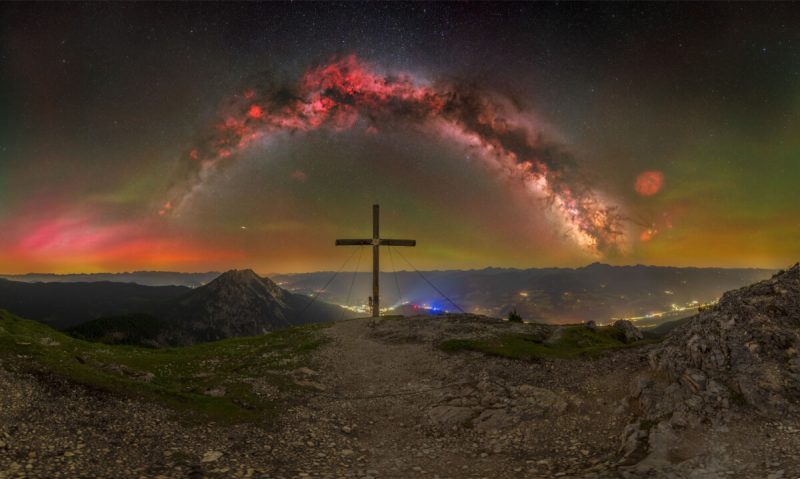
During the night I noticed that the northern sky appeared unusually pink on the camera display. At first I assumed it was strong airglow, but it soon became clear that a faint aurora had reached central Europe that night.
The final image shows a Milky Way arch combined with aurora and strong atmospheric airglow.
The panorama was captured with a 20mm lens in six to seven panels, each panel consisting of nine exposures of one minute, which were later stacked.
During the same night I also recorded additional H-alpha data, allowing the faint hydrogen emission regions of the Milky Way to become more visible.
While descending from the summit later that night, I photographed another panorama titled “Way to the Stars.”:
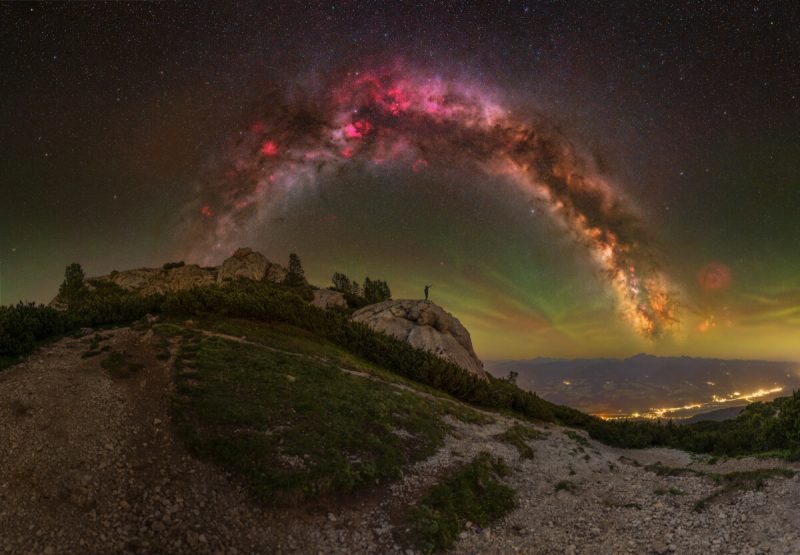
Summer nights in the Alps are short, so timing becomes critical.
While capturing the foreground, the first light of dawn was already appearing on the horizon, but I was still able to record the Milky Way arch during the remaining darkness.
The sky was captured using tracked exposures with my astro-modified Nikon camera, with about five stacked exposures per panel across six to seven panels.
Remarkably, both large panoramas were photographed during the same alpine night.
In addition to wide nightscape panoramas, I also enjoy capturing smaller sections of the sky in more detail.
One example is a 135mm image of the Orion region, photographed under the dark skies of the Hohe Dirn star park in Upper Austria:
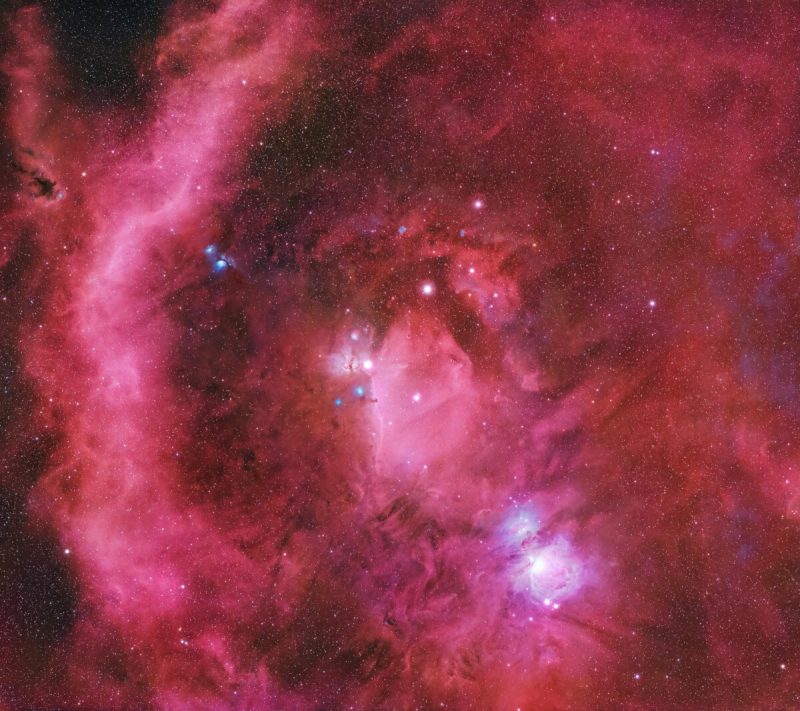
The goal of this image was to reveal the delicate hydrogen structures around Orion, especially the large arc of Barnard’s Loop.
The image combines one hour of RGB data and one hour of H-alpha exposures, revealing faint nebula structures that are usually difficult to capture in standard wide-field images.
Another image from Hohe Dirn shows the Milky Way core rising above the local observatory dome:
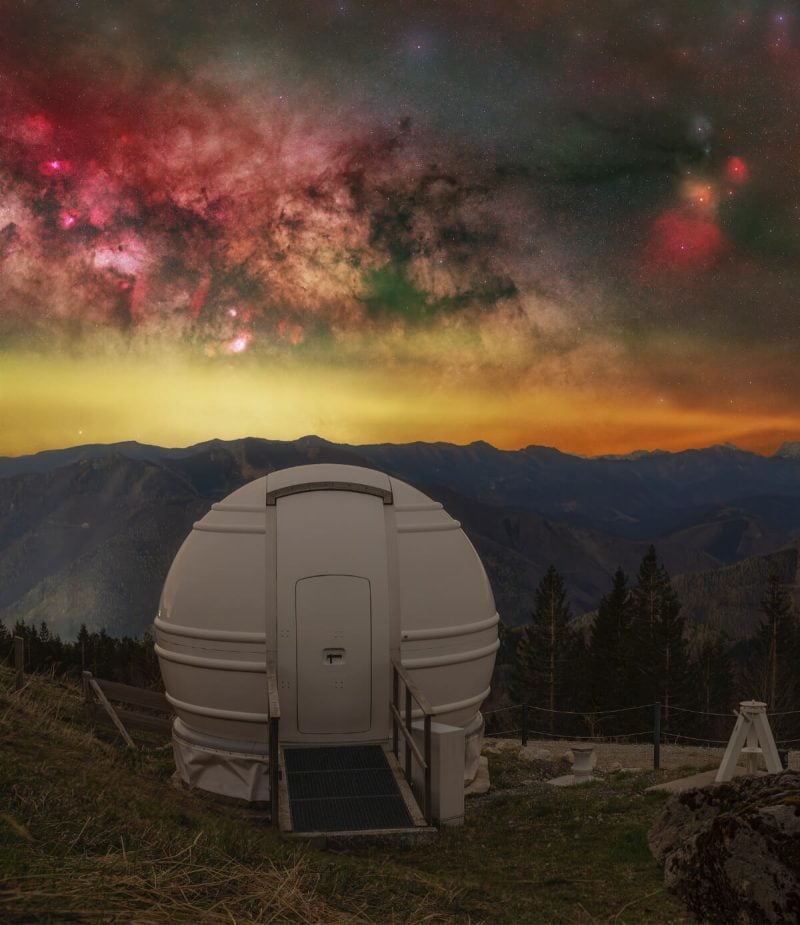
That night was far from ideal, with clouds covering the sky for most of the time and Saharan dust creating a yellow glow along the horizon.
Just as the Milky Way began to rise, a brief opening appeared in the clouds. I quickly captured the image using a 50mm lens with tracked exposures for the sky, combined with focus stacking for the foreground.
Even though the clear window lasted only a short time, it allowed the galactic core to appear beautifully above the observatory dome.
One of my personal favorite images is “Laussa Tree and the Stars.”:
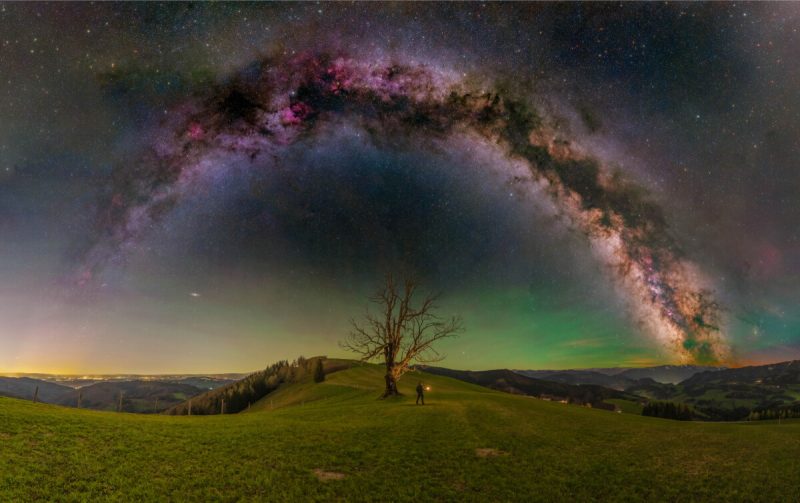
The photograph was taken in 2023 near the village of Laussa in Upper Austria.
The scene centers around a solitary dead tree that once stood on a small hilltop.
I captured a tracked panorama of six to seven panels, each consisting of nine one-minute exposures, while the foreground was photographed separately.
A single exposure of myself holding a small illuminated sphere beneath the tree adds a subtle human element to the scene.
Sadly, the tree was destroyed during a storm about a year later, making this image even more meaningful to me as it preserves a location that no longer exists.
The final image in this series was also captured on Stoderzinken, this time featuring a via ferrata suspension bridgebeneath the Milky Way.
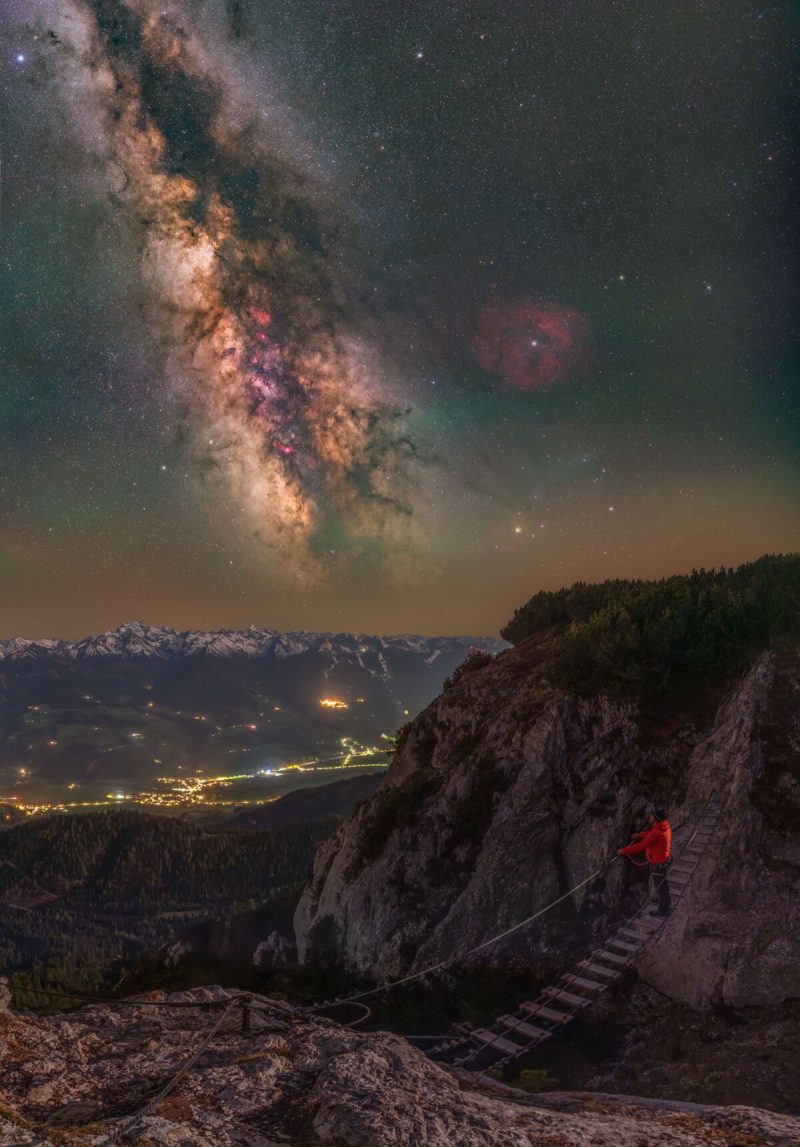
I was accompanied by my cousin, who agreed to stand on the bridge during the exposure.
Of course we explored the location during daylight to ensure everything would be safe in the dark.
The image itself is a small 20mm panorama with tracked and stacked sky exposures, while the foreground was photographed separately.
The night was slightly hazy, but the atmosphere created a calm and cinematic scene above the mountains.
For my alpine nightscape photography I usually work with tracked and stacked exposures to reveal the faint structures of the Milky Way.
In recent years I have also begun integrating H-alpha data into some of my nightscapes to highlight the hydrogen emission regions of our galaxy.
Recently I started using the Nomad star tracker, which is significantly lighter than my previous setup.
When hiking into the mountains, every kilogram matters, and reducing the weight of the equipment makes long nights in the Alps much easier.
Astrophotography in the mountains is always unpredictable. Weather conditions, wind, haze, or clouds often force quick decisions and improvisation.
But when everything comes together — a clear sky, the Milky Way above the mountains, and the quiet atmosphere of the alpine night — it creates moments that make the entire effort worthwhile.